
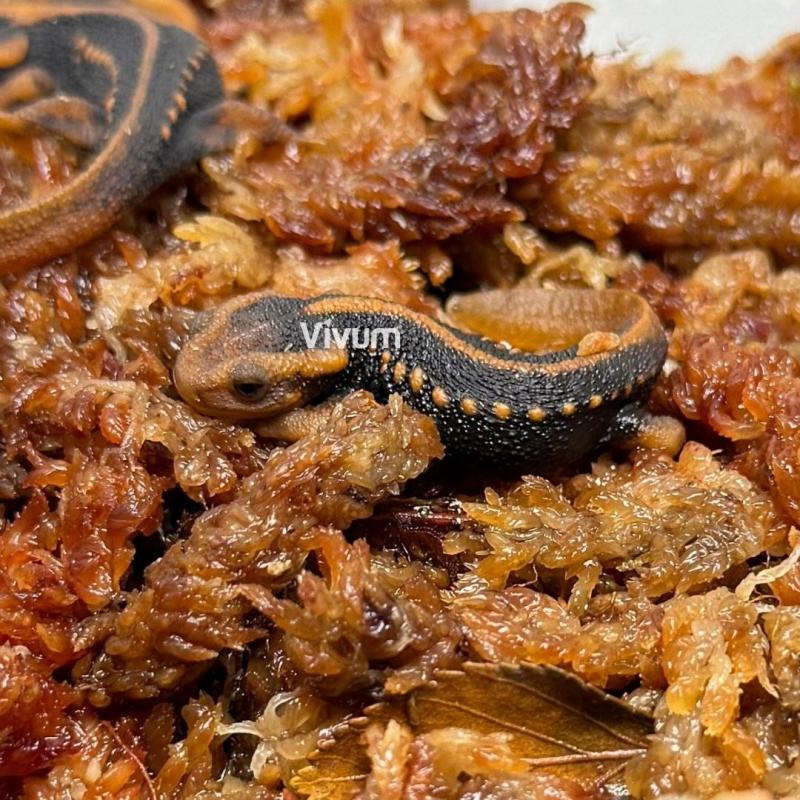
Generic photo of the species
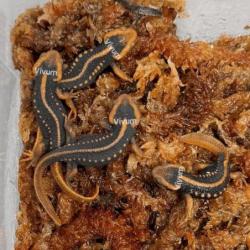
| Common Name: | Tritão Imperador |
| Scientific Name: | Tylototriton shanjing |
| CITES Appendix: | Yes, IB |
| Annex II Portuguese Ordinance No. 86/2018: | No |
Under Portuguese Law No. 95/2017 of 23 August, the sale and/or advertising of wild/exotic animals through websites or online platforms is not permitted. To find out which animals we currently have available and their conditions of sale, please get in touch with us.
 Progressive Discounts
The more you buy, the less you pay for transport
 Same Day Dispatch
For orders finalized by 3pm
 Live/Frozen Guaranteed Delivery
In live and frozen food
Size: Adults can reach 20cm
Origin: Yunnan (China), Myanmar and Laos
Lifespan: Up to 20 years in captivity
Natural Habitat: They inhabit subtropical mountain forests in south-western China, at altitudes between 1500 and 2500 metres
The Tritão Imperador (Tylototriton shanjing), also known as the Tritão Mandarim, is one of the most visually striking newts available in captivity. Its body is a very dark, almost black brown, contrasting vividly with intense orange markings on the head, dorsal ridge, lateral warts, limbs and tail.
Unlike many newts, the Tritão Imperador is mainly terrestrial, spending most of the year on land and only entering water to breed during the monsoon season. Keeping it in captivity is relatively straightforward for those with amphibian experience — the main challenge is keeping temperatures cool all year round. It is not recommended for beginners.
Size: A minimum terrarium of 60x40x40cm is recommended for 1 to 2 adults
Material: Glass (with a mesh lid for good ventilation)
The Tritão Imperador is a mountain species and does not tolerate high heat. The ideal temperature is between 16ºC and 22ºC during the day, dropping a few degrees at night. Under no circumstances should it exceed 25ºC, as higher temperatures can be fatal. In most homes, no heat source will be needed during the colder months. In summer, active cooling (such as a small fan or air conditioning) may be needed to keep the terrarium cool enough.
Although the Tritão Imperador does not need UVB, it benefits from a regular photoperiod simulating seasonal changes — 10 to 12 hours of light a day. A "daylight" spectrum LED lamp with low heat output is the most suitable option.
Coming from mountain forests, the Tritão Imperador needs high relative humidity, ideally between 70% and 90%. The terrarium should be misted regularly to maintain these levels. It is also essential to always provide a container of clean, fresh water (dechlorinated or spring water), deep enough for the animal to submerge completely but with easy-access sides so it can climb out. The water should be changed often to prevent bacterial growth.
The terrarium should mimic the humid mountain forest typical of this species. The ideal substrate is a mix of coco fibre, additive-free topsoil and sphagnum moss, at least 5 to 8cm deep. A layer of dry leaves on top helps retain humidity and provides shelter and enrichment. Include several hides such as flat cork, hollow logs and clumps of moss. Live plants such as pothos, bromeliads or ferns are an excellent addition, helping to stabilise humidity and support the animal's wellbeing.
Feeding habits: Carnivorous/Invertivorous
Diet: The Tritão Imperador should be fed 2 to 3 times a week. It prefers live or freshly killed prey, and earthworms are considered the ideal staple of a balanced diet. Prey should be appropriately sized for the animal.
Invertebrates: Earthworms (staple), Crickets, Roaches, Waxworms, Mealworms (in moderation), Small snails, Bloodworms, other insect larvae.
Supplementation is essential for the long-term health of the Tritão Imperador in captivity. Dust prey with a Calcium Supplement without D3 at every other meal and with a quality Multivitamin Complex (with Vit. D3) once a week. Earthworms, being naturally rich in nutrients, need supplementing less often than other insects.
Under Portuguese Law No. 95/2017 of 23 August, the sale and/or advertising of wild/exotic animals through websites or online platforms is not permitted. To find out which animals we currently have available and their conditions of sale, please get in touch with us.
