
| Common Name: | Tritão Crocodilo da Birmânia |
| Scientific Name: | Tylototriton shanorum |
| CITES Appendix: | Yes, IB |
| Annex II Portuguese Ordinance No. 86/2018: | No |
Under Portuguese Law No. 95/2017 of 23 August, the sale and/or advertising of wild/exotic animals through websites or online platforms is not permitted. To find out which animals we currently have available and their conditions of sale, please get in touch with us.
 Progressive Discounts
The more you buy, the less you pay for transport
 Same Day Dispatch
For orders finalized by 3pm
 Live/Frozen Guaranteed Delivery
In live and frozen food
O conteúdo (Texto e Fotografias) desta página está protegido por direitos de autor. A sua cópia, redistribuição ou modificação sem autorização prévia poderá resultar em responsabilização legal.
Size: Adults can reach 10 cm
Origin: Myanmar
Lifespan: Up to 10 years in captivity
Natural Habitat: They inhabit forested areas, usually close to small ponds or streams
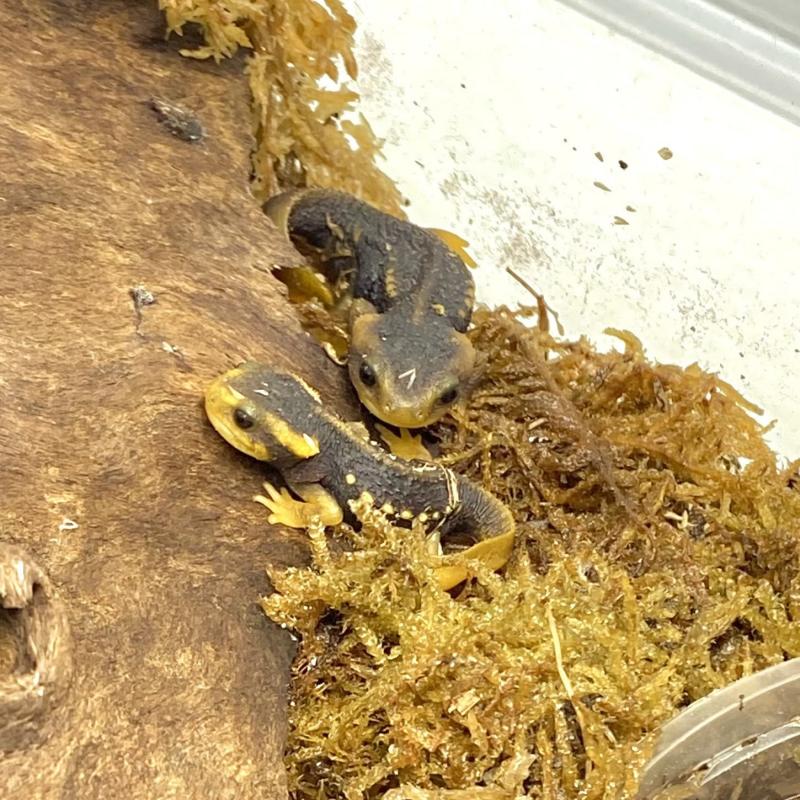
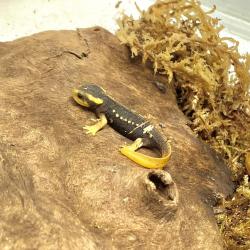
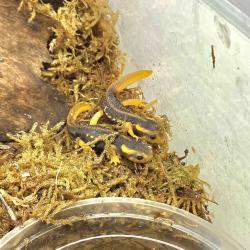
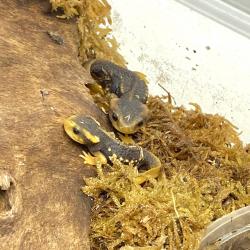
The Tritão Crocodilo da Birmânia is a recently described species of the genus Tylototriton. It is a distinctive-looking newt with mainly terrestrial habits. With a voracious appetite and a fearless attitude, it is a popular choice for newt and salamander enthusiasts.
Although this is a relatively easy species to keep, you should pay attention to a few aspects and ensure certain conditions, which you will find in the following paragraphs.
Size: A 60x45x45cm terrarium is recommended for up to 4 adults
Material: Glass
The Tritão Crocodilo da Birmânia can tolerate quite a wide temperature range. Ideally, during the day, the terrarium should be between 14 and 22ºC. Temperatures above 25ºC should be avoided. At night the temperature can drop to 10ºC. This means that, in most cases, no heat source is needed.
The Tritão Crocodilo da Birmânia does not need UVB. However, it benefits from exposure to low levels (using a ShadeDweller lamp)
Water should always be available as a small pool that the newts can easily get in and out of. The ideal water depth is 5-6cm. The water should be changed frequently to keep it clean and hygienic.
The Tritão Crocodilo da Birmânia is a terrestrial species, so special attention should be paid to the substrate, which should be damp but not waterlogged. Coco fibre and sphagnum moss are excellent options.
It is also important to provide hiding places in the form of leaf litter, logs and plants (artificial or live).
Feeding habits: Insectivorous
Diet: They should be fed daily as juveniles and every other day as adults.
Insects: A varied diet based on earthworms, alternating with crickets and larvae, should be offered.
For vitamin and mineral supplementation, dust 2 meals a week with Calcium Powder and one with a quality Multivitamin Complex (with Vit. D3).
Under Portuguese Law No. 95/2017 of 23 August, the sale and/or advertising of wild/exotic animals through websites or online platforms is not permitted. To find out which animals we currently have available and their conditions of sale, please get in touch with us.
