
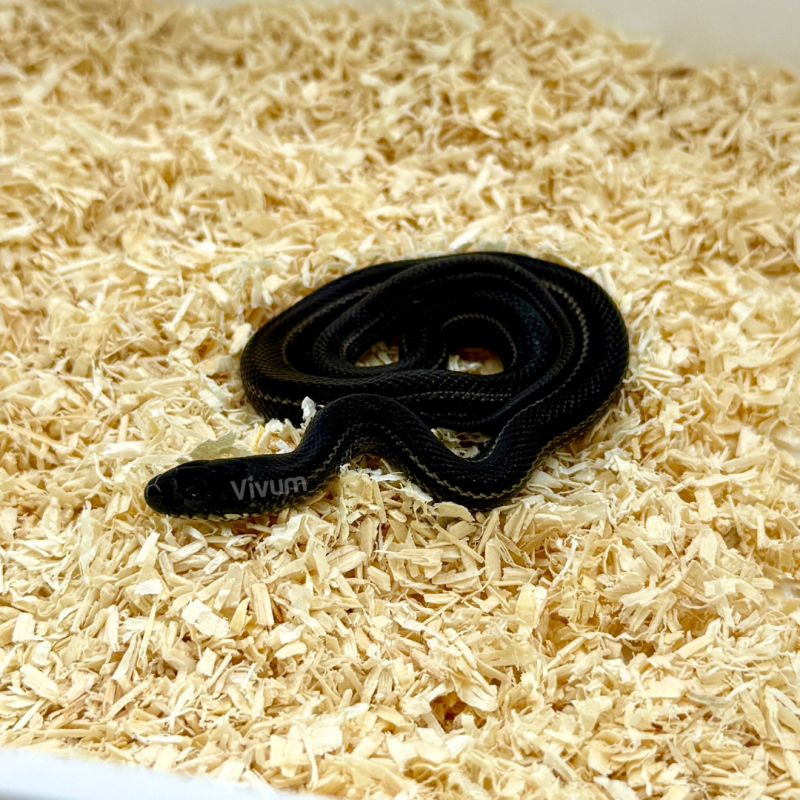
| Common Name: | Cobra das Estepes |
| Scientific Name: | Elaphe dione |
| CITES Appendix: | No |
| Annex II Portuguese Ordinance No. 86/2018: | Yes |
Under Portuguese Law No. 95/2017 of 23 August, the sale and/or advertising of wild/exotic animals through websites or online platforms is not permitted. To find out which animals we currently have available and their conditions of sale, please get in touch with us.
 Progressive Discounts
The more you buy, the less you pay for transport
Progressive Discounts
The more you buy, the less you pay for transport
 Same Day Dispatch
For orders finalized by 3pm
Same Day Dispatch
For orders finalized by 3pm
 Live/Frozen Guaranteed Delivery
In live and frozen food
Live/Frozen Guaranteed Delivery
In live and frozen food
Size: Adults can reach between 70 and 100cm
Origin: Central and East Asia, Siberia, Mongolia, China, Korea and the far east of Europe
Lifespan: Up to 15-20 years
Natural Habitat: It inhabits steppes, grasslands, rocky and semi-arid areas, and is also common on farmland and near human buildings
The Cobra das Estepes (Elaphe dione), also known as the Cobra de Dione or Steppe Ratsnake, is the colubrid species with the widest geographical range of all the "ratsnakes", stretching from Eastern Europe to the Russian Far East. It was originally described by Pallas in 1773 under the name Coluber dione, and still has several taxonomic synonyms today (Coluber tataricus, Elaphe czerskii, among others) resulting from its wide range and regional variability.
It is a terrestrial to semi-arboreal species with a docile temperament and habits that are relatively easy to replicate in captivity, making it an excellent smaller alternative to the traditional cobras-do-milho for anyone looking for their first colubrid. Although it is easy to keep, you should pay attention to a few aspects and ensure certain conditions, which you will find in the following paragraphs.
Size: A minimum terrarium of 90x45x45cm is recommended for 1 adult (females and pairs may benefit from a slightly larger terrarium)
Material: Glass or Wood
You should set up a terrarium with a thermal gradient, with a minimum temperature of 22ºC to 24ºC on the cool side and a basking spot reaching 28ºC to 30ºC for 6-8 hours a day. At night the temperature can safely drop to 17ºC-18ºC. To achieve these temperatures, use a heat source, ideally a Heat Mat or a Ceramic Heat Emitter/Deep Heat Projector, always controlled by a thermostat. This species does not tolerate constantly high temperatures well, so general overheating of the terrarium should be avoided.
The Cobra das Estepes does not need UVB to survive. However, as is currently recommended for most reptiles, it can benefit from exposure to low levels (Ferguson Zone 1, using a ShadeDweller lamp), which contributes to the animal's overall wellbeing.
The ideal relative humidity for this species is between 40% and 60%. Lightly mist the terrarium whenever humidity drops below these values. During ecdysis (shedding), it is recommended to provide a "humid hide" by filling a hide with dampened substrate (coco fibre or sphagnum moss) to help ensure a complete, trouble-free shed.
A water bowl with clean, fresh water should always be available, large enough for the animal to soak if it wishes.
For substrate you can choose aspen shavings, beech bark or a mix of coco fibre with sand and dry leaf litter, which also allows some burrowing behaviour. As a species with semi-arboreal tendencies, equip the terrarium with some logs and branches for climbing, and always provide at least two hides (one on the warm side and one on the cool side) so the animal feels secure in both thermal zones.
Feeding habits: Carnivorous
Diet: In the wild it feeds on small rodents, lizards, amphibians and eggs, but in captivity it is fed exclusively on pre-killed whole prey of a size suited to the thickness of the animal's body. Juveniles should be fed every 5 to 7 days, subadults every 7 to 10 days and adults every 10 to 14 days.
Prey: Mice and Rats, depending on the animal's size
Unlike insectivorous or herbivorous species, a whole-prey diet naturally provides all essential nutrients, vitamins and minerals in a balanced way, so no additional supplementation is needed for healthy animals fed like this.
Under Portuguese Law No. 95/2017 of 23 August, the sale and/or advertising of wild/exotic animals through websites or online platforms is not permitted. To find out which animals we currently have available and their conditions of sale, please get in touch with us.