
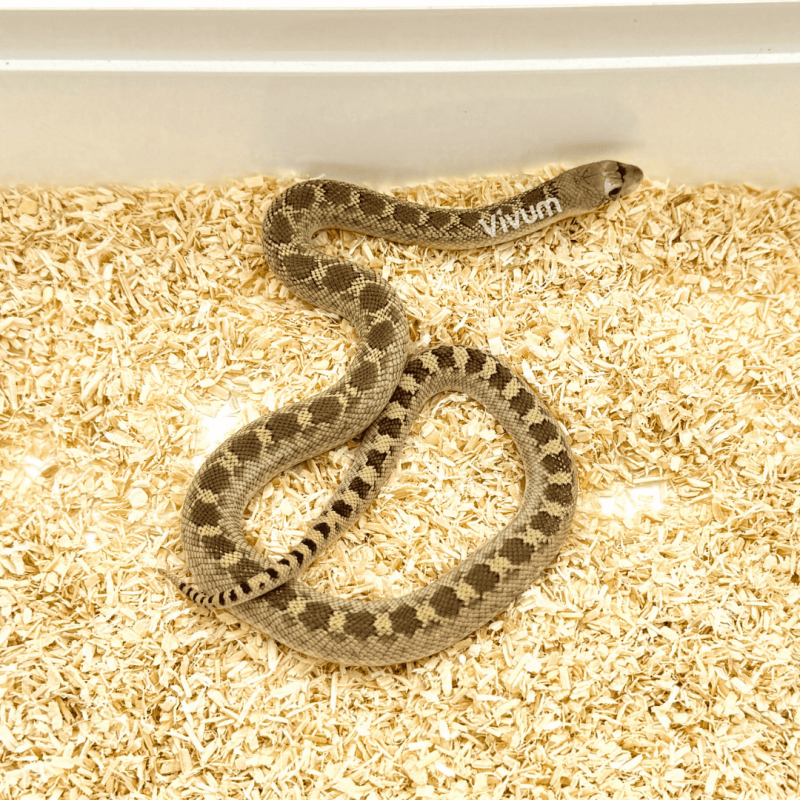
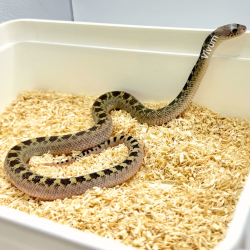
| Common Name: | Bullsnake |
| Scientific Name: | Pituophis catenifer sayi |
| CITES Appendix: | No |
| Annex II Portuguese Ordinance No. 86/2018: | Yes |
Under Portuguese Law No. 95/2017 of 23 August, the sale and/or advertising of wild/exotic animals through websites or online platforms is not permitted. To find out which animals we currently have available and their conditions of sale, please get in touch with us.
 Progressive Discounts
The more you buy, the less you pay for transport
Progressive Discounts
The more you buy, the less you pay for transport
 Same Day Dispatch
For orders finalized by 3pm
Same Day Dispatch
For orders finalized by 3pm
 Live/Frozen Guaranteed Delivery
In live and frozen food
Live/Frozen Guaranteed Delivery
In live and frozen food
Size: Adults can reach between 1.2 and 1.8 metres, with exceptional specimens exceeding 2 metres
Origin: Central North America — the Great Plains of the United States, southern Canada and northern Mexico
Lifespan: Up to 20 years
Natural Habitat: It inhabits grasslands, sandy fields and dry scrubland in central North America
The Bullsnake (Pituophis catenifer sayi), also referred to in older literature as Pituophis melanoleucus sayi or Pituophis sayi, is a subspecies of the Bullsnake (Pituophis catenifer) and one of the largest colubrid snakes in North America. It is a robust, fast-growing species, highly valued in reptile keeping for its impressive size, the wide variety of morphs available and because, despite a defensive temperament as a juvenile, it becomes quite docile and easy to handle as an adult with regular handling. It is known for its theatrical defensive behaviour, which includes loud hissing and vibrating the tip of its tail against the substrate, imitating the sound and posture of a rattlesnake, despite being completely harmless.
Although this is a relatively easy species to keep, you should pay attention to a few aspects and ensure certain conditions, which you will find in the following paragraphs.
Size: A minimum terrarium of 120x60x60cm is recommended for 1 adult. For juveniles, a 60x30x30cm terrarium is enough until they grow larger, and should be replaced with a bigger one as the animal grows
Material: Glass or Wood, with good ventilation (mesh top)
You should set up a terrarium with a thermal gradient, with a minimum temperature of 22ºC on the cool side and a basking spot between 29ºC and 32ºC. At night the temperature can drop slightly, but should not fall much below 20ºC. To achieve these temperatures, use a heat source such as a Heat Mat or a Halogen Lamp, properly controlled by a thermostat.
The Bullsnake is mostly diurnal in spring and autumn, becoming more crepuscular/nocturnal during the hottest summer months to avoid extreme heat. Although not strictly necessary, exposure to low-intensity UVB (Ferguson Zone 1) has proven benefits for vitamin D3 synthesis and natural behaviour. Given the scarcity of specific literature on this species' exact UVB requirements, a conservative approach is recommended, with a low-output (2 to 5%) UVB tube positioned to create a gradient, allowing the animal to choose whether and when to bask.
The Bullsnake comes from relatively dry grassland areas, so the ideal relative humidity is between 40% and 60%. During ecdysis (shedding), it is recommended to slightly increase humidity (60-70%) by misting, to help ensure a complete, trouble-free shed.
A water bowl with clean, fresh water should always be available, large enough for the animal to submerge if it wishes. However, it should not be too large, as this makes water contamination more likely and females may mistake it for an egg-laying site.
As a species with a strong burrowing instinct, a loose substrate that allows this natural behaviour should be provided, such as coco fibre, aspen or a soil-and-sand mix, at least 5-8cm deep. Cedar and pine substrates should be avoided, as they are toxic to reptiles. There should be at least two hides, one on the warm side and one on the cool side of the terrarium, so the animal feels secure in both thermal zones. Although mainly terrestrial, it benefits from sturdy logs or branches as environmental enrichment.
Feeding habits: Carnivorous (Rodents)
Diet: Juveniles should be fed weekly. For adults, the frequency should be reduced to one meal every 10-14 days to prevent obesity, a common problem in this species in captivity due to its voracious appetite. Prey size should roughly match the widest part of the animal's body.
Rodents: Mice and Rats.
Unlike insectivorous or herbivorous species, the Bullsnake feeds on whole prey, which naturally provide a complete and balanced nutritional profile, so additional calcium or multivitamin supplementation is not usually needed. The exception may be breeding females, for which a vet may advise occasional supplementation according to the individual animal's needs.
Under Portuguese Law No. 95/2017 of 23 August, the sale and/or advertising of wild/exotic animals through websites or online platforms is not permitted. To find out which animals we currently have available and their conditions of sale, please get in touch with us.