
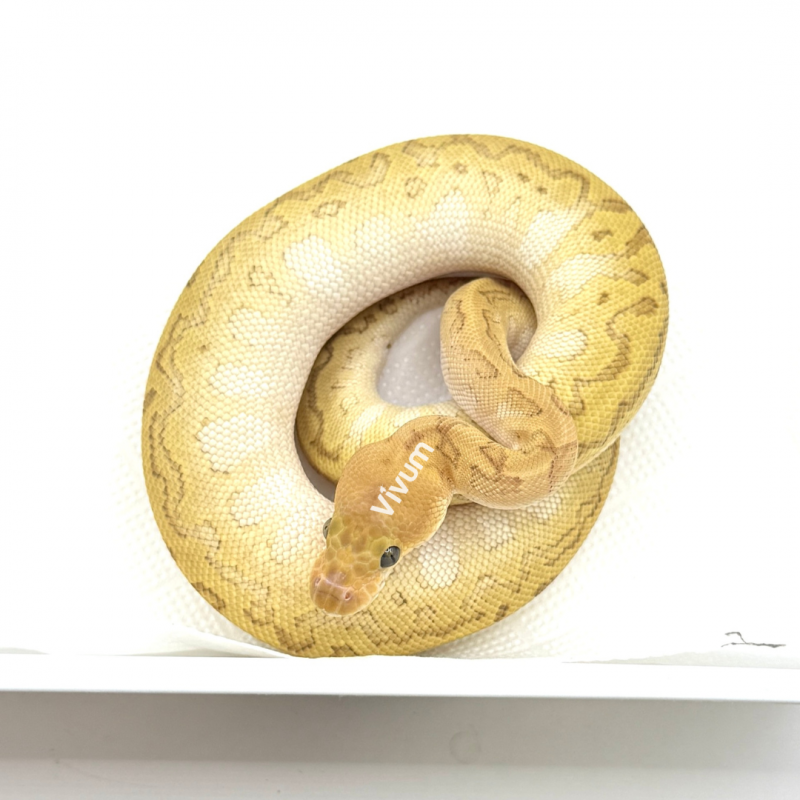
| Common Name: | Pitão Bola |
| Scientific Name: | Python regius |
| CITES Appendix: | Yes, IIB |
| Annex II Portuguese Ordinance No. 86/2018: | Yes |
Under Portuguese Law No. 95/2017 of 23 August, the sale and/or advertising of wild/exotic animals through websites or online platforms is not permitted. To find out which animals we currently have available and their conditions of sale, please get in touch with us.
 Progressive Discounts
The more you buy, the less you pay for transport
 Same Day Dispatch
For orders finalized by 3pm
 Live/Frozen Guaranteed Delivery
In live and frozen food
O conteúdo (Texto e Fotografias) desta página está protegido por direitos de autor. A sua cópia, redistribuição ou modificação sem autorização prévia poderá resultar em responsabilização legal.
Size: Adults can reach up to 150cm
Origin: Africa
Lifespan: Up to 20 years in captivity
Natural Habitat: The Pitão Bola originates from sub-Saharan forests and savannahs, where it lives in slightly humid areas with vegetation to hide in.
The Pitão Bola is one of the most commonly kept snake species in captivity. Its variety of colours and patterns, together with its calm nature and ease of care, make it an excellent choice for both experienced keepers and those new to the hobby.
Although this is a relatively easy species to keep, you should pay attention to a few aspects and ensure certain conditions, which you will find in the following paragraphs.
Size: Minimum 90x45x45cm for 1 adult. Young snakes can be kept in smaller terrariums.
Material: Glass or Wood
You should set up a terrarium with a thermal gradient, with a minimum temperature of 25ºC on the cool side and around 32ºC on the warm side. At night the temperature should not drop below 20ºC. To maintain these temperatures, use a Heat Mat under the terrarium; a Basking Spot lamp can also be used on the warm side during the day. Heat sources should be connected to a thermostat.
Although not essential, daytime exposure to a UVI between 0 and 3 (Ferguson Zone 1-2) is recommended. To achieve these UV levels you can use ShadeDweller UV lamps.
Relative air humidity should be kept at around 60%, with a slight increase to 80% recommended during shedding.
This species likes slightly humid environments, so it should always have a water source available to bathe in. Use a substrate that holds moisture better, or provide humid hides where the snake can shelter.
You can use a Coco Chips substrate or Arcadia Earth Mix. You can create a three-dimensional habitat using branches and rocks, making sure they are firmly secured and able to support the animal's weight. Especially with young animals, it is advisable to provide plenty of hiding places to avoid unnecessary stress. You can also use live plants (safe species only) and/or artificial ones.
Feeding habits: Carnivorous
Juvenile Diet: You can feed prey of up to 15% of the animal's body mass every 7 days.
Adult Diet (from 2 years old): You can feed prey of up to 10% of the animal's body mass every 7 days.
Dead Mice, Rats and/or Chicks.
Under Portuguese Law No. 95/2017 of 23 August, the sale and/or advertising of wild/exotic animals through websites or online platforms is not permitted. To find out which animals we currently have available and their conditions of sale, please get in touch with us.


