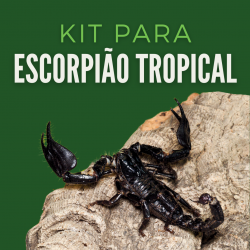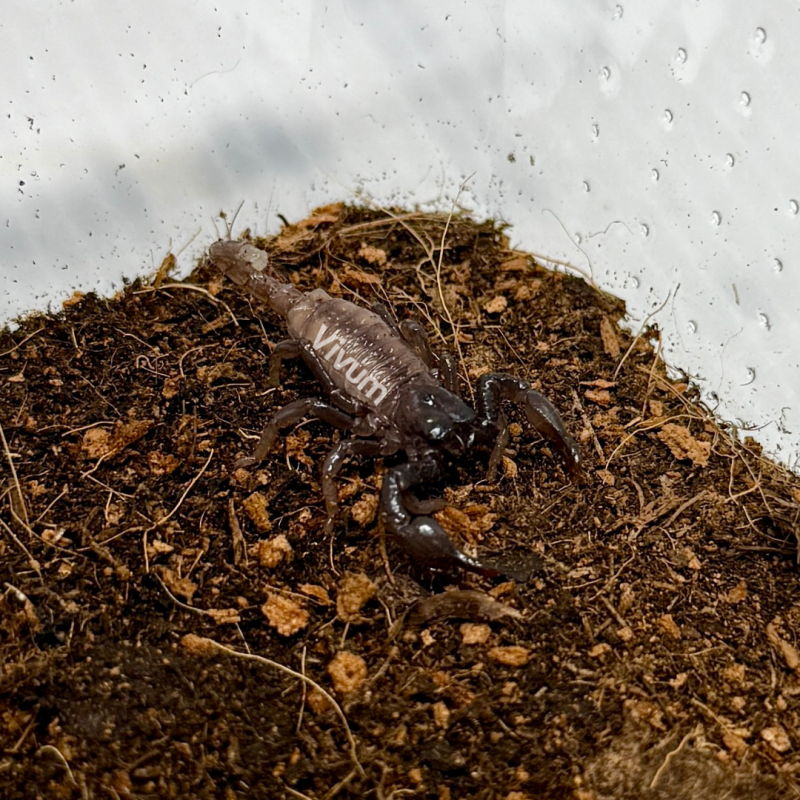

| Common Name: | Escorpião Imperador |
| Scientific Name: | Pandinus imperator |
| CITES Appendix: | Yes, IIB |
| Annex II Portuguese Ordinance No. 86/2018: | Yes |
Under Portuguese Law No. 95/2017 of 23 August, the sale and/or advertising of wild/exotic animals through websites or online platforms is not permitted. To find out which animals we currently have available and their conditions of sale, please get in touch with us.
 Progressive Discounts
The more you buy, the less you pay for transport
Progressive Discounts
The more you buy, the less you pay for transport
 Same Day Dispatch
For orders finalized by 3pm
Same Day Dispatch
For orders finalized by 3pm
 Live/Frozen Guaranteed Delivery
In live and frozen food
Live/Frozen Guaranteed Delivery
In live and frozen food
Size: Adults can reach 20cm
Origin: West Africa (Nigeria, Togo, Sierra Leone, Ghana, Republic of the Congo, Gabon, Senegal)
Lifespan: Up to 8 years (females tend to live longer)
Natural Habitat: They inhabit the humid rainforests of West Africa, sheltering in burrows dug in the ground, under fallen logs, in dense foliage and in termite mounds
The Escorpião Imperador (Pandinus imperator) is one of the most popular and recognised pet arthropods in the world. Its impressive size — it is one of the largest scorpions on the planet — together with its relatively calm temperament and ease of care make it an excellent choice for anyone taking their first steps into the world of invertebrates. Its glossy black colouring, robust textured pincers and ability to glow blue-green under ultraviolet light make this species truly fascinating.
Despite its intimidating appearance, the venom of the Escorpião Imperador has low toxicity for healthy adults, comparable to a bee sting. Even so, it should always be handled with caution and respect, and unnecessary contact should be avoided. People with insect venom allergies or weakened immune systems should take particular care.
Although this is a relatively easy species to keep, you should pay attention to a few aspects and ensure certain conditions, which you will find in the following paragraphs.
Size: A minimum terrarium of 60x40x40cm is recommended for 1 adult
Material: Glass (with a mesh top for adequate ventilation)
Keep the terrarium at an ambient temperature of 25ºC to 30ºC. At night it can drop to 22ºC, but should not go below this. To maintain the right temperatures, use a heat mat on the side (never underneath, as the animal digs down to escape heat) or a low-wattage heat lamp, always controlled by a thermostat.
The Escorpião Imperador is nocturnal and does not need UVB. However, a natural 12-hour light/12-hour dark cycle using a low-heat LED lamp can be beneficial, helping regulate the animal's natural behaviour and supporting the growth of live plants in the terrarium.
Coming from the humid rainforests of West Africa, the Escorpião Imperador needs high relative humidity, between 70% and 80%. This humidity is essential for successful ecdysis (moulting) and for the animal's overall health. The best way to maintain these levels is to keep the substrate damp (but not waterlogged) and occasionally overflow the water dish. You can also use sphagnum moss to help retain moisture and create more humid microhabitats.
A shallow dish of clean, fresh water should always be available, easy for the scorpion to drink from but with no risk of drowning.
Substrate is one of the most important elements of the Escorpião Imperador's terrarium, as this species is a natural burrower. Use coco fibre, peat or a mix of both at least 10 to 15cm deep so the animal can dig its burrows. The substrate should be damp but never waterlogged — when you squeeze a handful, it should hold its shape without releasing water.
Equip the terrarium with several hides, such as pieces of cork bark, stable stones and logs. Live or artificial plants can be added to enrich the environment and help retain humidity. Make sure all decor is firmly set and cannot topple onto the animal.
Feeding habits: Carnivorous/Insectivorous
Diet: The Escorpião Imperador is an opportunistic predator. Young animals should be fed twice a week with appropriately sized prey. Adults can be fed 1 to 2 times a week, or every 7 to 14 days, adjusting the frequency based on the abdomen — a visibly swollen abdomen means the animal does not need to eat. Always remove uneaten prey after 24 hours to prevent mould, mites or stress.
Insects: Crickets, Roaches (Dubia, Blaptica), Locusts, Mealworms, Waxworms...
Unlike reptiles, scorpions do not need direct calcium or vitamin supplementation. The best way to ensure complete nutrition is through gut-loading of the prey: feed the insects nutrient-rich vegetables (carrot, cabbage, etc.) for 24 to 48 hours before offering them to the scorpion. This ensures the animal receives the micronutrients it needs naturally.
Under Portuguese Law No. 95/2017 of 23 August, the sale and/or advertising of wild/exotic animals through websites or online platforms is not permitted. To find out which animals we currently have available and their conditions of sale, please get in touch with us.