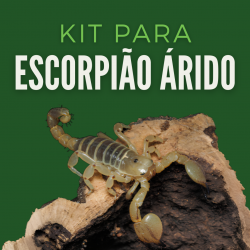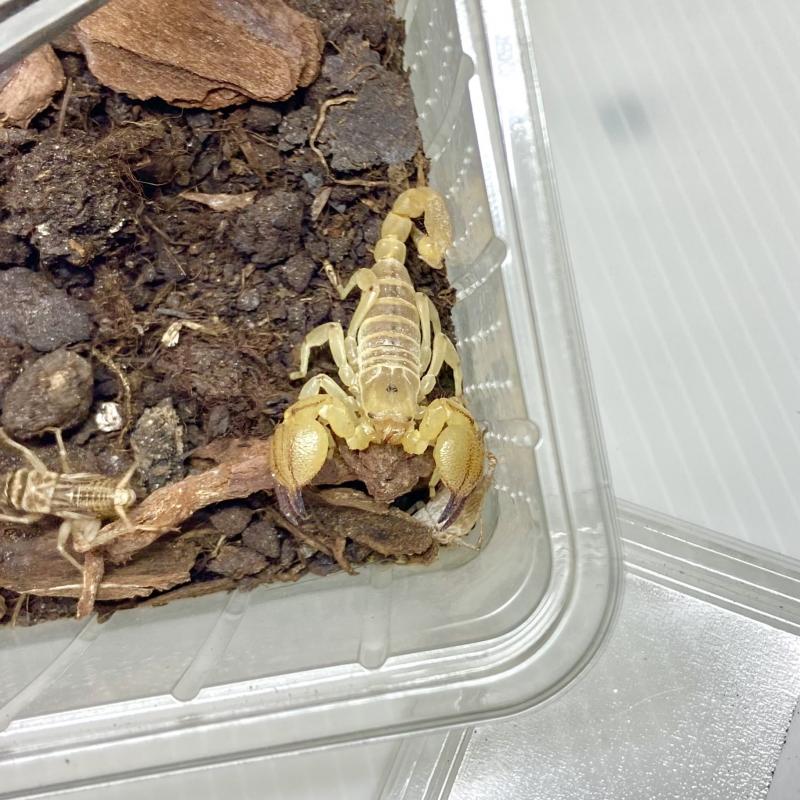
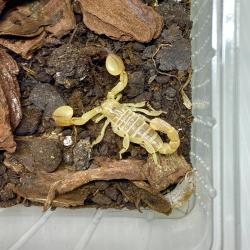
| Common Name: | Escorpião Dourado |
| Scientific Name: | Scorpio maurus |
| CITES Appendix: | No |
| Annex II Portuguese Ordinance No. 86/2018: | Yes |
Under Portuguese Law No. 95/2017 of 23 August, the sale and/or advertising of wild/exotic animals through websites or online platforms is not permitted. To find out which animals we currently have available and their conditions of sale, please get in touch with us.
 Progressive Discounts
The more you buy, the less you pay for transport
Progressive Discounts
The more you buy, the less you pay for transport
 Same Day Dispatch
For orders finalized by 3pm
Same Day Dispatch
For orders finalized by 3pm
 Live/Frozen Guaranteed Delivery
In live and frozen food
Live/Frozen Guaranteed Delivery
In live and frozen food
Size: Adults can reach 8cm
Origin: North Africa and the Middle East
Lifespan: Up to 5 years
Natural Habitat: The Escorpião Dourado is a species that inhabits arid/desert areas.
The Escorpião Dourado is a small but very active and easy-to-keep species. Like all scorpions, it is venomous. Although the venom is not usually dangerous to most people, handling should be avoided. Even so, it is still a scorpion species suitable for beginners.
Although this is an easy species to keep, you should pay attention to a few aspects and ensure certain conditions, which you will find in the following paragraphs.
Size: A minimum terrarium of 30x30x30cm is recommended for 1 adult
Material: Glass/Plastic
Set up a terrarium with a thermal gradient, with a minimum of 24ºC on the cool side and around 32ºC on the warm side. At night the temperature should not drop below 18ºC. To reach both day and night temperatures, you can use a Heat Mat (properly controlled by a thermostat).
Scorpions do not need UVB.
The Escorpião Dourado comes from arid/desert climates, so a relative humidity of around 30 to 60% should be maintained.
It is important that they always have a shallow water dish available to drink from.
For decor, try to recreate an arid ground habitat (sand, stones and dry humus). This species likes to burrow, so provide an arid substrate at least 7cm deep. You can decorate the terrarium with logs, plants (live or artificial), cork bark, stones...
Feeding habits: Insectivorous
Diet: As juveniles they should be fed twice a week. As they grow, feeding can be reduced to weekly.
Insects: Roaches, Crickets, Locusts, Calcium Worms, Waxworms, Mealworms...
For vitamin and mineral supplementation, alternate a meal dusted with Calcium Powder with one dusted with a quality Multivitamin Complex (with Vit. D3).
Under Portuguese Law No. 95/2017 of 23 August, the sale and/or advertising of wild/exotic animals through websites or online platforms is not permitted. To find out which animals we currently have available and their conditions of sale, please get in touch with us.