
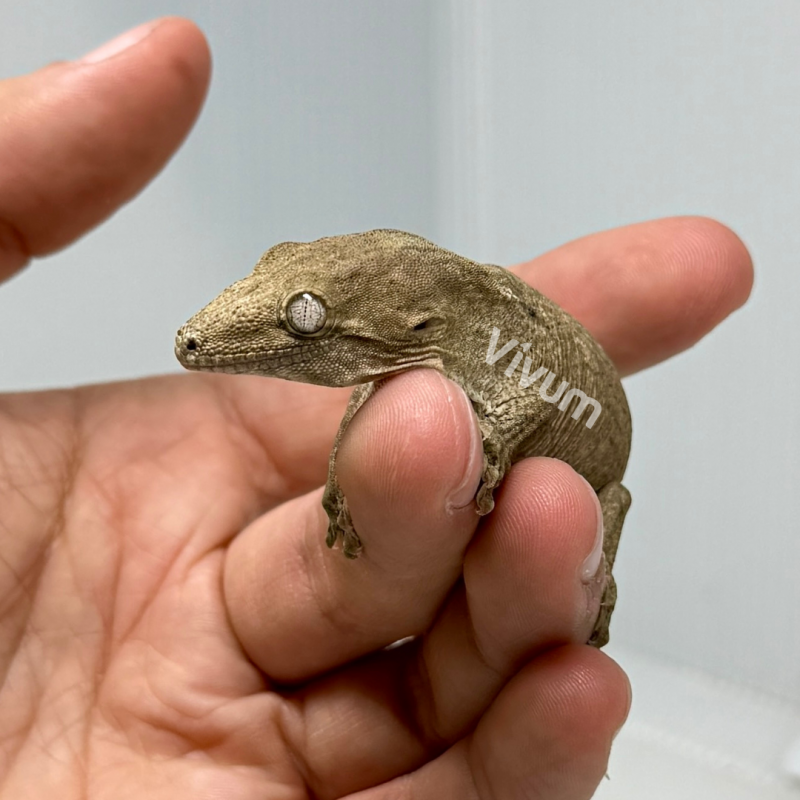
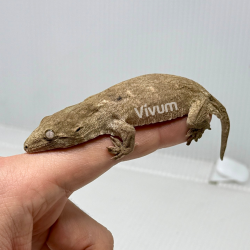
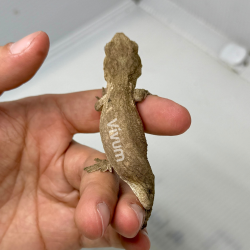
| Common Name: | Gecko Leachianus |
| Scientific Name: | Rhacodactylus leachianus |
| CITES Appendix: | No |
| Annex II Portuguese Ordinance No. 86/2018: | No |
Under Portuguese Law No. 95/2017 of 23 August, the sale and/or advertising of wild/exotic animals through websites or online platforms is not permitted. To find out which animals we currently have available and their conditions of sale, please get in touch with us.
 Progressive Discounts
The more you buy, the less you pay for transport
 Same Day Dispatch
For orders finalized by 3pm
 Live/Frozen Guaranteed Delivery
In live and frozen food
Size: Adults can reach 35-43cm
Origin: New Caledonia (Grande Terre and Isle of Pines)
Lifespan: Up to 20-30 years in captivity
Natural Habitat: The tree canopy of New Caledonia's tropical forests
The Gecko Leachianus (Rhacodactylus leachianus), also known as the New Caledonian giant gecko, is the largest gecko in the world. With its robust body, broad triangular head, loose velvety skin and cryptic green, brown, grey and white colouring that mimics lichen and moss, it is a truly unique species. There are two recognised subspecies: R. l. leachianus, from Grande Terre, and R. l. henkeli, from the Isle of Pines, the latter being slightly smaller and more colourful. Its characteristic voice and interesting temperament make it a fascinating animal for experienced reptile enthusiasts.
This species requires specific, dedicated care, especially regarding space, temperature and humidity. Ensure all the conditions listed in the following paragraphs to guarantee your Gecko Leachianus' health and wellbeing.
Size: A minimum terrarium of 90x45x90cm is recommended for 1 adult R. l. henkeli, and 120x60x120cm for 1 adult R. l. leachianus
Material: Glass (with mesh top and/or side panels for adequate ventilation)
A terrarium with a thermal gradient should be provided, with an ambient daytime temperature between 23ºC and 27ºC, and possibly a gentle hotspot (basking spot) of approximately 28-30ºC. At night the temperature can drop to 18-21ºC. As a species of temperate rainforest, the Gecko Leachianus is sensitive to excessive heat, so the temperature should not exceed 30ºC anywhere in the terrarium. In colder months, a low-wattage lamp or a Deep Heat Projector properly controlled by a thermostat may be needed.
Although nocturnal, the Gecko Leachianus benefits from exposure to low UVB levels during the daytime cycle (UVI 0.7-1.4, equivalent to Ferguson Zone 1-2). A ShadeDweller or equivalent 7% lamp on a 12-hour cycle is recommended. This light-dark cycle is essential to regulate the animal's natural behaviour.
The Gecko Leachianus originates from humid tropical forests and therefore needs high relative humidity, between 60% and 80%. The most effective way to maintain this is to mist the terrarium 1 to 2 times a day, preferably in the evening and, if needed, in the morning. Misting is also an essential water source, as the animal often drinks droplets that collect on leaves and terrarium walls. A water bowl with clean, fresh water should always be available. A moisture-retaining substrate and plants (live or artificial) also help stabilise humidity levels throughout the day.
The Gecko Leachianus is a strictly arboreal species, so the terrarium should prioritise vertical space. It is essential to furnish it with abundant vertical structure: diagonal and vertical logs, branches, vines and cork tubes, which mimic natural tree hollows and serve as shelter and resting places. Decor should also include plenty of foliage, with live plants (such as Pothos and Philodendrons) or artificial ones, which provide hiding places and help maintain humidity. For substrate, a tropical mix with good moisture retention is recommended, such as coco fibre, organic soil and Sphagnum moss, topped with a layer of leaf litter. The substrate should be at least 5-8cm deep. This species should be kept singly, as it is territorial and can be aggressive towards other individuals.
Feeding habits: Omnivorous (Frugivorous/Insectivorous)
Diet: Gecko Leachianus should be fed 3 to 4 times a week with specific commercial diets for geckos of the genus Rhacodactylus, supplemented with live insects. Juveniles should be fed more often, 4 to 5 times a week.
Commercial diets: Pangea, Repashy, Gecko Nutrition and equivalents – these diets provide the complete nutritional base and should not be placed on the terrarium floor, but in wall-mounted feeders.
Insects: Crickets, Roaches, Locusts, Mealworms, Waxworms (in moderation), Calcium Worms – sized appropriately for the animal (no larger than the distance between the gecko's eyes).
Commercial diets already include a balanced nutritional base. When offering insects, dust them with Calcium Powder (without D3) at every meal, alternating with a good-quality Multivitamin Complex with D3 every second insect meal. UVB exposure, even at low levels, contributes positively to calcium metabolism and vitamin D3 synthesis.
Under Portuguese Law No. 95/2017 of 23 August, the sale and/or advertising of wild/exotic animals through websites or online platforms is not permitted. To find out which animals we currently have available and their conditions of sale, please get in touch with us.
