
- New
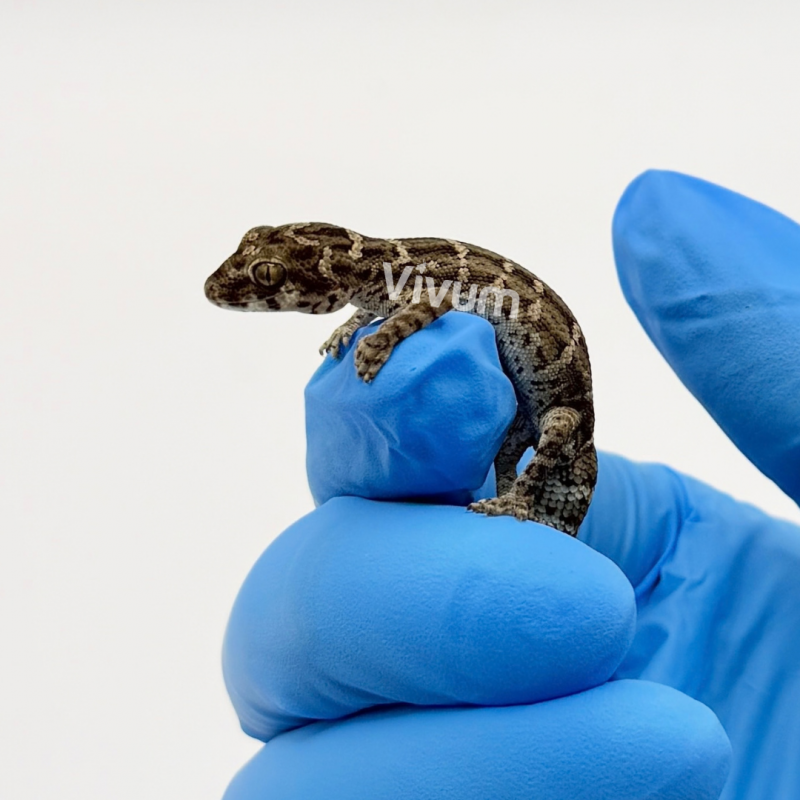
| Common Name: | Viper Gecko |
| Scientific Name: | Hemidactylus imbricatus |
| CITES Appendix: | No |
| Annex II Portuguese Ordinance No. 86/2018: | No |
Under Portuguese Law No. 95/2017 of 23 August, the sale and/or advertising of wild/exotic animals through websites or online platforms is not permitted. To find out which animals we currently have available and their conditions of sale, please get in touch with us.
 Progressive Discounts
The more you buy, the less you pay for transport
Progressive Discounts
The more you buy, the less you pay for transport
 Same Day Dispatch
For orders finalized by 3pm
Same Day Dispatch
For orders finalized by 3pm
 Live/Frozen Guaranteed Delivery
In live and frozen food
Live/Frozen Guaranteed Delivery
In live and frozen food
Size: Adults can reach 8 to 10cm in total length
Origin: Pakistan and south-eastern Iran
Lifespan: Up to 10 to 15 years in captivity
Natural Habitat: Arid and semi-arid rocky steppe, where they shelter in crevices and under stones during the hottest hours
The Viper Gecko (Hemidactylus imbricatus, formerly classified as Teratolepis fasciata), also known as the Carrot-tail Viper Gecko, is a small terrestrial gecko with an unmistakable appearance. Its name comes from its large overlapping (imbricate) dorsal scales, giving it a pine-cone-like texture, and its short, thick, flattened carrot-shaped tail, which serves as a fat reserve. When threatened, it may raise and wave its tail – a defensive behaviour reminiscent of some small vipers.
They are crepuscular, curious and active geckos that become more visible during the day once well acclimatised. Due to their small size and speed, they are not suited to frequent handling and are mainly display animals. Like other geckos, they can drop their tail (autotomy) if grabbed or stressed, so they should be handled as little as possible and always with great care.
Although this is a relatively easy species to keep, a few aspects require attention and certain conditions must be ensured, as described in the following paragraphs.
Size: A minimum terrarium of 60x45x45cm is recommended for 1 to 3 animals (prioritise floor space)
Material: Glass (with mesh top for adequate ventilation)
A thermal gradient should be provided: a hotspot between 33ºC and 35ºC at one end of the terrarium and a cool zone between 24ºC and 28ºC at the other. At night the temperature can drop to 21-24ºC. The most suitable heat source is a low-wattage heat lamp over a flat stone, which can be complemented by a side-mounted heat mat. All heat sources should be controlled by a thermostat.
As a crepuscular species, the Viper Gecko benefits from low-intensity UVB (Ferguson Zone 1 to 2). A low-index UVB lamp (5-7%) installed near the warm zone is recommended, with plenty of hides so the animal can regulate its exposure. If UVB lighting is not used, vitamin D3 supplementation is essential. Maintain a photoperiod of 12 hours of light and 12 hours of darkness.
Coming from arid areas, the Viper Gecko needs low ambient humidity, below 50%. However, a humid hide (a cave with sphagnum moss or lightly moistened substrate) should be provided in the cool zone, as it is essential for healthy shedding. Lightly misting one corner of the terrarium two to three times a week is enough.
A small, shallow water dish with clean, fresh water should always be available.
The substrate should be at least 5cm deep; a mix of additive-free soil and sand, compactable clay or a bioactive desert substrate can be used. Avoid very fine, loose sand as the only substrate, as it makes burrowing difficult and increases the risk of ingestion.
Furnish the terrarium with several hides in both thermal zones, stable stacks of stones (well seated on the floor so they cannot fall on the animal), cork, wood and desert plants, live or artificial. Rich decor encourages natural exploratory behaviour and helps the animal feel more secure.
Feeding habits: Insectivorous
Juvenile Diet: Small insects daily or every other day
Adult Diet: Insects 2 to 3 times a week, adjusting quantity to body condition (the tail should stay thick, without signs of obesity)
Insects: Crickets, Roaches (Shelfordella lateralis, Blaptica dubia juveniles), Small locusts, Mealworms, Calcium Worms. Prey should be no larger than the distance between the animal's eyes.
Insects should be dusted with calcium at every meal. If UVB lighting is used, a calcium without D3 is recommended; otherwise, use a calcium with D3. Once or twice a month, also dust prey with a multivitamin supplement. Feeding insects a nutrient-rich diet (gut-loading) in the preceding 24 to 48 hours contributes to a more complete diet.
Under Portuguese Law No. 95/2017 of 23 August, the sale and/or advertising of wild/exotic animals through websites or online platforms is not permitted. To find out which animals we currently have available and their conditions of sale, please get in touch with us.
