
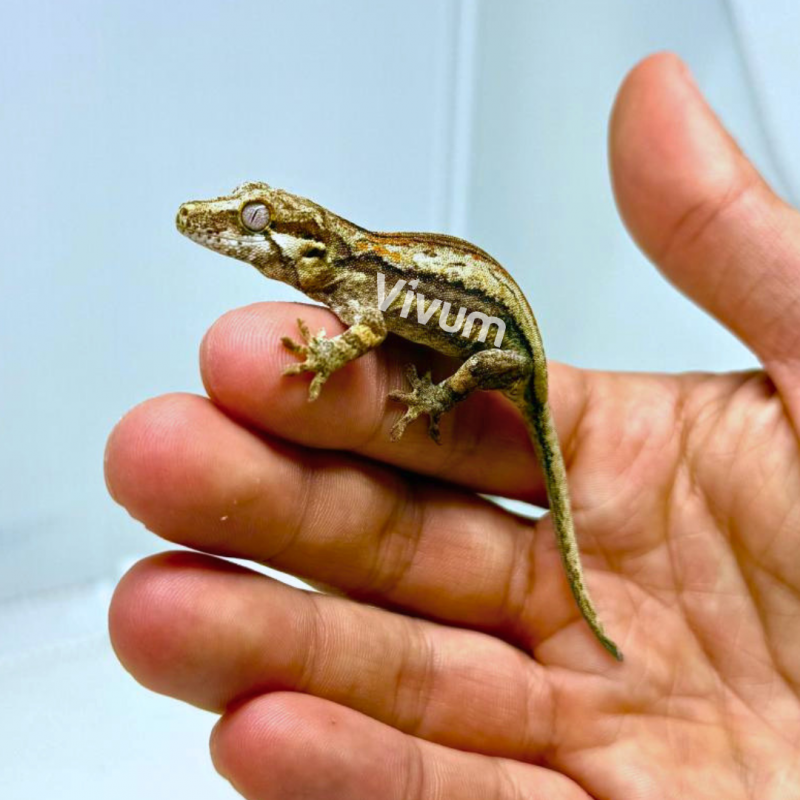
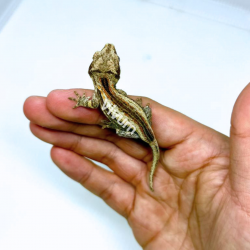
| Common Name: | Gargoyle Gecko |
| Scientific Name: | Rhacodactylus auriculatus |
| CITES Appendix: | No |
| Annex II Portuguese Ordinance No. 86/2018: | No |
Under Portuguese Law No. 95/2017 of 23 August, the sale and/or advertising of wild/exotic animals through websites or online platforms is not permitted. To find out which animals we currently have available and their conditions of sale, please get in touch with us.
 Progressive Discounts
The more you buy, the less you pay for transport
Progressive Discounts
The more you buy, the less you pay for transport
 Same Day Dispatch
For orders finalized by 3pm
Same Day Dispatch
For orders finalized by 3pm
 Live/Frozen Guaranteed Delivery
In live and frozen food
Live/Frozen Guaranteed Delivery
In live and frozen food
O conteúdo (Texto e Fotografias) desta página está protegido por direitos de autor. A sua cópia, redistribuição ou modificação sem autorização prévia poderá resultar em responsabilização legal.
Size: Adults can reach 20cm
Origin: New Caledonia
Lifespan: Up to 20 years in captivity
Natural Habitat: The tree canopy of New Caledonia's tropical forests
The Gargoyle Gecko is a climbing/arboreal lizard species. Its distinctive appearance, combined with its easy and simple care, makes it a highly sought-after species for beginners and more experienced keepers alike.
Although this is a relatively easy species to keep, a few aspects require attention and certain conditions must be ensured, as described in the following paragraphs.
Size: A 45x45x60cm terrarium is recommended for 1 adult
Material: Glass (with mesh top/good airflow)
During the day, a temperature between 23ºC and 26ºC should be maintained. At night the temperature can drop to 18ºC. These temperatures mean that, in most cases, no heat source is needed except in winter.
Gargoyle Gecko do not require UVB radiation. However, they benefit from exposure to low levels of it (using a ShadeDweller lamp).
Water should always be available in a shallow water bowl. This species requires a relative humidity of at least 50%, ideally around 70%.
Gargoyle Gecko feel comfortable among foliage. The terrarium should be furnished with plenty of vertical structure so they can occupy its upper areas. Branches, cork bark, stones and plants (artificial or live) can be used. Young animals should not be kept in excessively large terrariums.
Feeding habits: Frugivorous/Insectivorous
Diet: They should be fed specific commercial diets 3 to 4 times a week. Live insects can also be offered occasionally as a treat.
Commercial diets: Pangea, Repashy and GeckoNutrition...
Insects: Roaches, Crickets, Calcium Worms...
For vitamin and mineral supplementation, any insects offered should be dusted with a Multivitamin. Commercial Diets already include a balanced mix of all the nutrients essential for the animal's health and wellbeing.
Under Portuguese Law No. 95/2017 of 23 August, the sale and/or advertising of wild/exotic animals through websites or online platforms is not permitted. To find out which animals we currently have available and their conditions of sale, please get in touch with us.
