
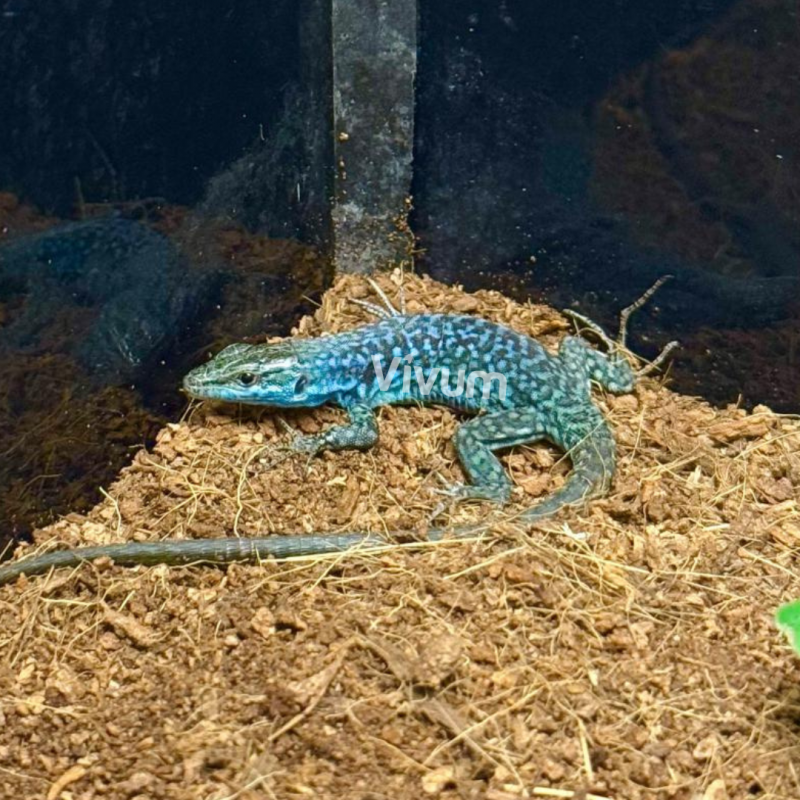

| Common Name: | Podarcis Sicula Paulae |
| Scientific Name: | Podarcis sicula paulae |
| CITES Appendix: | No |
| Annex II Portuguese Ordinance No. 86/2018: | No |
Under Portuguese Law No. 95/2017 of 23 August, the sale and/or advertising of wild/exotic animals through websites or online platforms is not permitted. To find out which animals we currently have available and their conditions of sale, please get in touch with us.
 Progressive Discounts
The more you buy, the less you pay for transport
 Same Day Dispatch
For orders finalized by 3pm
 Live/Frozen Guaranteed Delivery
In live and frozen food
O conteúdo (Texto e Fotografias) desta página está protegido por direitos de autor. A sua cópia, redistribuição ou modificação sem autorização prévia poderá resultar em responsabilização legal.
Size: Adults can reach 18cm
Origin: Italy
Lifespan: Up to 10 years
Natural Habitat: The subspecies Podarcis sicula paulae is predominantly terrestrial and inhabits rocky areas, scrubland and open fields with low Mediterranean vegetation.
The Podarcis sicula paulae are small, active and robust lizards, known for their agility and curious behaviour. Although they need more space and have specific handling requirements, they are an interesting choice for experienced keepers looking for a species with vibrant patterns and dynamic behaviour.
Although this is an easy species to keep, a few aspects require attention and certain conditions must be ensured, as described in the following paragraphs.
Size: A minimum terrarium of 60x45x45cm is recommended for 1 to 2 adults. (Males should not be kept together)
Material: Glass or Wood
Podarcis sicula paulae need a thermal gradient with a temperature of 24ºC on the cool side and up to 36ºC at the hottest point (hotspot). At night temperatures can drop to 18-20ºC.
UVB lighting (5-7%) is essential to ensure vitamin D3 synthesis and bone health, complemented by halogen or neodymium lamps for heat and light.
This species is adapted to Mediterranean habitats with low to moderate humidity. Keep relative humidity between 40-60% by lightly misting the terrarium once a week and allowing it to dry completely between mistings.
A small container of clean, fresh water should always be available.
Podarcis sicula paulae appreciate an environment that mimics rocky, open areas. Use substrates such as sandy soil or soil and sand mixes. Decorate the terrarium with stones, cork bark, logs and branches for climbing. Natural or artificial plants can be used to create hiding places and enrich the environment.
Feeding habits: Insectivorous
Diet: Juveniles should be fed every day. As they grow, feeding frequency can be reduced to every other day.
Insects: Roaches, Crickets, Calcium Worms, Waxworms, Mealworms...
For vitamin and mineral supplementation, alternate a meal dusted with Calcium Powder with one dusted with a good-quality Multivitamin Complex (with Vit. D3).
Under Portuguese Law No. 95/2017 of 23 August, the sale and/or advertising of wild/exotic animals through websites or online platforms is not permitted. To find out which animals we currently have available and their conditions of sale, please get in touch with us.
