
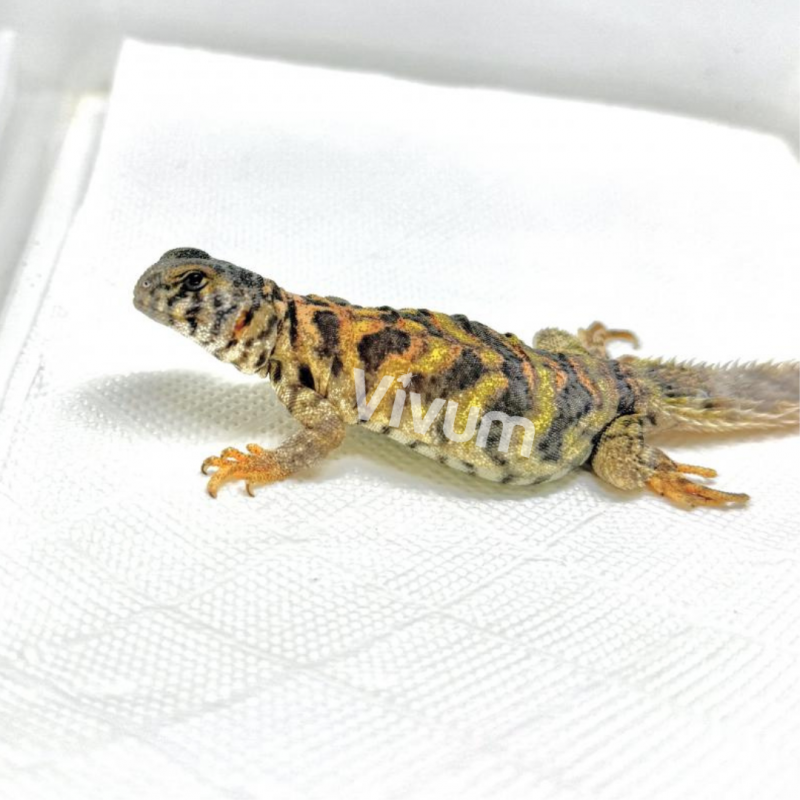

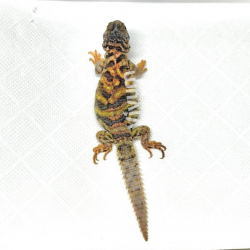
| Common Name: | Lagarto de Cauda Espinhosa Ornado |
| Scientific Name: | Uromastyx ornata |
| CITES Appendix: | Yes, IIB |
| Annex II Portuguese Ordinance No. 86/2018: | No |
Under Portuguese Law No. 95/2017 of 23 August, the sale and/or advertising of wild/exotic animals through websites or online platforms is not permitted. To find out which animals we currently have available and their conditions of sale, please get in touch with us.
 Progressive Discounts
The more you buy, the less you pay for transport
 Same Day Dispatch
For orders finalized by 3pm
 Live/Frozen Guaranteed Delivery
In live and frozen food
O conteúdo (Texto e Fotografias) desta página está protegido por direitos de autor. A sua cópia, redistribuição ou modificação sem autorização prévia poderá resultar em responsabilização legal.
Size: Adults can reach 30cm
Origin: Egypt, Israel, Jordan and Saudi Arabia
Lifespan: Up to 20 years in captivity
Natural Habitat: Desert and rocky regions of North Africa and the Middle East
Uromastyx ornata, also known as the Lagarto de Cauda Espinhosa Ornado, is a fascinating reptile characterised by its vibrant colours and sturdy, spiny tail. This species stands out for its beauty, especially during the breeding season, when males display impressive multicoloured patterns. They are diurnal, mainly herbivorous animals, perfectly adapted to hot, arid environments.
Although this species requires specific husbandry conditions, with proper care it can make an excellent pet, both for experienced enthusiasts and for anyone looking for a reptile with distinctive features and interesting behaviour.
Size: Minimum of 120x60x60cm for 1 adult
Material: Glass or Wood
A terrarium with a thermal gradient should be provided, with a minimum temperature of 27ºC on the cool side and a basking spot reaching 49-54ºC during the day. At night the temperature can drop to 21ºC, but should not go below this. To achieve this gradient, a powerful heat lamp positioned over a flat rock where the animal can absorb heat is recommended.
UVB radiation is essential for this species, which requires high exposure levels (Ferguson Zone 3-4). UVB tubes of 10-12% or higher are recommended, and should be replaced every 6-12 months even if they still emit visible light.
Uromastyx ornata are adapted to extremely dry environments. Relative humidity in the terrarium should be kept between 20% and 30%. Excessive humidity can lead to respiratory problems and fungal infections. It is important to provide a water bowl with fresh water, although these animals get most of their hydration from the food they eat.
The terrarium should simulate this species' natural desert and rocky environment. The ideal substrate is a mix of reptile sand and clay soil, at least 10cm deep to allow digging behaviour. Decor should include securely stacked rocks, creating platforms for thermoregulation and hides. Dry branches and drought-tolerant plants (natural or artificial) can be added for vertical structure and environmental enrichment.
Feeding habits: Predominantly Herbivorous
Diet: The Uromastyx ornata diet should consist of 90% vegetables, flowers and herbs, and only 10% fruit. Juveniles can be fed daily, while adults should be fed 3 to 5 times a week.
Vegetables and leafy greens: Chicory, Radicchio, Dandelion, Rocket, Watercress, Chard, Cabbage, Spinach (in moderation), Hibiscus flowers
Vegetables: Squash, Courgette, Cucumber, Bell Pepper, Carrot (grated)
Edible herbs and flowers: Dandelion, Clover, Mallow, Untreated rose petals
Fruit (in moderation): Fig, Melon, Apple, Pear (seedless)
Grains and seeds (occasionally): Sprouted lentils, Pumpkin seeds (unsalted)
Supplementation is crucial for these animals' health. Use a calcium supplement without D3 at every meal and a high-quality multivitamin with D3 once a week. For breeding females, increase the frequency of calcium supplementation. Adequate UVB exposure supports vitamin D3 synthesis, essential for calcium absorption and the prevention of metabolic bone disease.
Under Portuguese Law No. 95/2017 of 23 August, the sale and/or advertising of wild/exotic animals through websites or online platforms is not permitted. To find out which animals we currently have available and their conditions of sale, please get in touch with us.
