

| Common Name: | Tarântula Neoholothele incei |
| Scientific Name: | Neoholothele incei |
| CITES Appendix: | N/A |
| Annex II Portuguese Ordinance No. 86/2018: | Yes |
Under Portuguese Law No. 95/2017 of 23 August, the sale and/or advertising of wild/exotic animals through websites or online platforms is not permitted. To find out which animals we currently have available and their conditions of sale, please get in touch with us.
 Progressive Discounts
The more you buy, the less you pay for transport
 Same Day Dispatch
For orders finalized by 3pm
 Live/Frozen Guaranteed Delivery
In live and frozen food
Size: Adults can reach a 7-9cm leg span
Origin: Trinidad and Venezuela
Lifespan: Up to 10 years (females), 2-3 years (males)
Natural Habitat: They inhabit humid rainforests of Trinidad and tropical regions of Venezuela
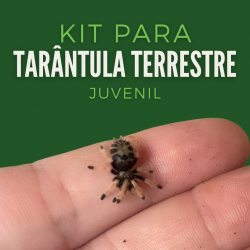
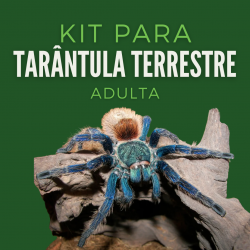
The Tarântula Neoholothele incei, formerly known as Holothele incei, is a fascinating dwarf tarantula from the rainforests of Trinidad and Venezuela. It comes in two distinct colour forms: the "Gold" form and the "Olive" form, the former resulting from a recessive genetic mutation. Both forms show characteristic star patterns on the carapace and chevron patterns on the abdomen.
One of this species' most remarkable traits is its ability to build extensive web networks, creating elaborate tunnels that fill the whole terrarium. Unlike most New World tarantulas, N. incei has no urticating hairs, a rare trait that makes it interesting to enthusiasts. It is also known for being able to live in groups, although communal keeping requires special care and experience.
Although it is a relatively hardy and easy-to-keep species, it requires some specific care, described in the following paragraphs, to ensure its health and wellbeing.
Size: A minimum terrarium of 20x20x20cm is recommended for 1 adult
Material: Glass or plastic with good ventilation
Keep a constant temperature between 23ºC and 28ºC. In most cases, normal room temperature is enough and no extra heat source is needed. If the room temperature consistently drops below 23ºC, you can use a heat mat or a low-wattage ceramic heat emitter to maintain suitable levels.
As this species does not need UVB, UV lamps are not recommended. This tarantula is mainly nocturnal and prefers environments with little direct light.
The Tarântula Neoholothele incei needs a relative humidity between 65% and 75%, reflecting its humid tropical habitat. To maintain these levels, keep part of the substrate slightly damp (about 1/3 of the terrarium) and lightly mist the terrarium 1-2 times a week.
A shallow container of clean, fresh water should always be available. Due to this species' small size, use a small dish to avoid any risk of drowning. Good ventilation is important to prevent fungi or bacteria developing in the high humidity.
Substrate is a key element for this species. A 10-13cm layer is recommended, using coco fibre or a substrate mix that retains some moisture. N. incei is an opportunistic burrower and will build extensive silk-lined tunnel systems.
Decor should be kept simple so the tarantula can build its elaborate web structures. You can include one or two cork hides and a few artificial plants as web anchor points. Avoid overcrowding the terrarium, as this species will turn all available space into a complex network of silk tunnels — fascinating behaviour to watch.
Feeding habits: Insectivorous
Diet: Juveniles should be fed once a week with small prey. Adults can be fed every 7-10 days. This species has a voracious appetite and can take down prey its own size.
For juveniles: Fruit flies (Drosophila), micro crickets, small roaches
For adults: Crickets, Roaches (Dubia, Red Runner), small Locusts, Mealworms
Prey offered should not be larger than the length of the tarantula's carapace. Always remove uneaten prey after 24 hours to avoid stress and potential injuries.
Tarantulas do not need vitamin or mineral supplements when fed a varied diet of live, healthy insects. Make sure feeder insects are properly gut-loaded before being offered, so the tarantula gets all the nutrients it needs.
Neoholothele incei has a nervous, fast temperament, although it is not aggressive. It prefers to flee rather than confront when threatened. It rarely adopts threat postures, but can move very quickly when startled. The lack of urticating hairs makes it less likely to cause skin irritation, but handling is not recommended due to its skittish behaviour and the risk of falls.
This species is known for being able to live in groups (communally), a rare trait among tarantulas. However, communal keeping requires experience, a suitably spacious terrarium, plentiful food and constant monitoring to prevent cannibalism. For beginners, keeping them individually is strongly recommended.
Under Portuguese Law No. 95/2017 of 23 August, the sale and/or advertising of wild/exotic animals through websites or online platforms is not permitted. To find out which animals we currently have available and their conditions of sale, please get in touch with us.