
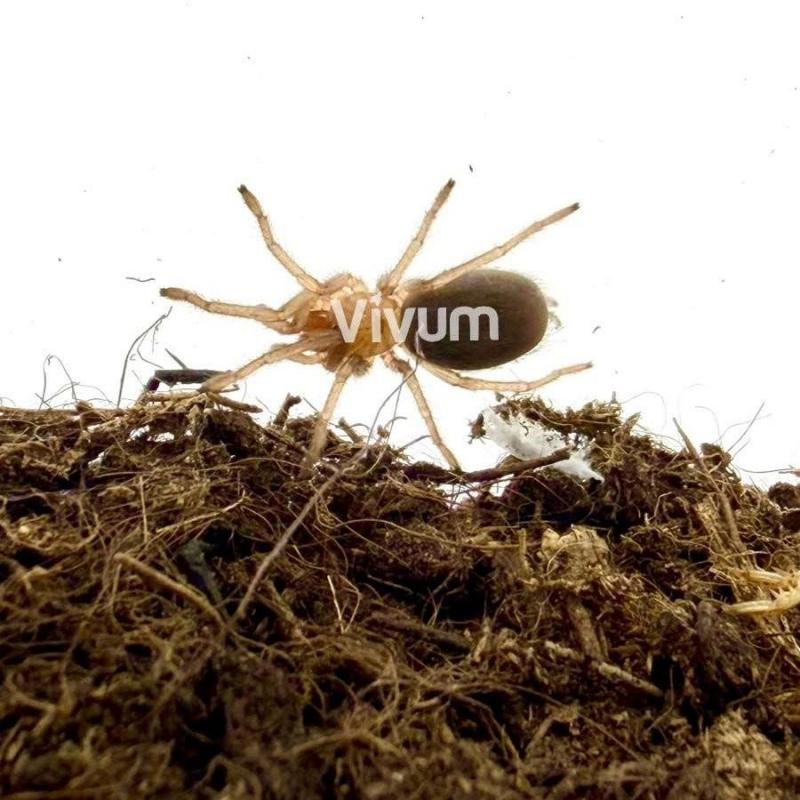
Generic photo of the species
| Common Name: | Tarântula Brachypelma auratum |
| Scientific Name: | Brachypelma auratum |
| CITES Appendix: | Yes, IIB |
| Annex II Portuguese Ordinance No. 86/2018: | Yes |
Under Portuguese Law No. 95/2017 of 23 August, the sale and/or advertising of wild/exotic animals through websites or online platforms is not permitted. To find out which animals we currently have available and their conditions of sale, please get in touch with us.
 Progressive Discounts
The more you buy, the less you pay for transport
 Same Day Dispatch
For orders finalized by 3pm
 Live/Frozen Guaranteed Delivery
In live and frozen food
Size: Adults can reach a leg span of 13 to 15cm
Origin: Mexico (Guerrero, Michoacán and State of Mexico)
Lifespan: Females up to 20 to 25 years; males up to 5 to 7 years
Natural Habitat: They inhabit tropical dry forest and stony mid-altitude hillsides, where they dig burrows in the ground, often under rocks and roots
Brachypelma auratum, commonly known as the Mexican Flame Knee, is a terrestrial New World tarantula closely related to Brachypelma hamorii and Brachypelma smithi. It stands out for its velvety black body and the well-defined reddish-orange markings on its knees (patellae), which give its legs a "flame" look. It is one of the most striking and sought-after species of the genus.
It is a slow-growing, long-lived tarantula with a generally calm temperament. However, when disturbed it tends to readily flick urticating hairs, which can irritate the skin, eyes and airways. It is an excellent choice for beginners, provided handling is avoided.
Although it is an easy species to keep, attention should be paid to a few aspects and certain conditions should be ensured, which are described in the following paragraphs.
Size: An enclosure of at least 30x30x25cm is recommended for 1 adult (floor space is more important)
Material: Glass, plastic or acrylic, with good ventilation
The enclosure temperature should be kept between 22ºC and 27ºC. In most cases no additional heat source is needed, except in cold rooms during winter. If necessary, a heat mat can be placed on the side — never underneath the enclosure — and always controlled by a thermostat. A slight drop in temperature during winter is natural and well tolerated.
Tarantulas do not require any UVB or special lighting. If lighting is used for display purposes, choose a cool, low-intensity light source and avoid overheating the enclosure.
The ideal relative humidity is between 60% and 70%. The substrate should be kept mostly dry, lightly moistening one corner from time to time, especially for juveniles. Avoid waterlogged substrate and stuffy conditions.
A shallow dish of clean, fresh water should always be available.
As a terrestrial species, the enclosure should favour floor space over height, which also reduces the risk of falls — which can be fatal for a heavy-bodied tarantula. A layer of substrate (coco fibre, peat or a mix with some soil) 8 to 12cm deep is recommended to allow the spider to burrow.
A hide should be provided, such as a half cork bark or a cave, partially buried, which the spider can use as a starting point for its burrow. The decor can be completed with rocks, roots and artificial plants, making sure everything is stable.
Feeding habits: Carnivore/Insectivore
Diet: Juveniles can be fed once or twice a week with prey sized according to the spider's abdomen. Adults can be fed every 10 to 14 days and may fast for long periods, especially before a moult, which is perfectly normal. Always remove uneaten prey after 24 hours.
Insects: Crickets, Roaches (Blaptica dubia, Shelfordella lateralis), Locusts and Mealworms or Superworms (as an occasional treat).
Tarantulas do not need vitamin or mineral supplements, as they obtain all the nutrients they need from the prey they eat. To maximise the nutritional value of the prey, it is recommended to feed the insects a nutrient-rich diet (gut-loading) for 24 to 48 hours before offering them to the tarantula. Avoid offering wild-caught prey, as it may carry parasites or pesticides harmful to the animal.
Under Portuguese Law No. 95/2017 of 23 August, the sale and/or advertising of wild/exotic animals through websites or online platforms is not permitted. To find out which animals we currently have available and their conditions of sale, please get in touch with us.
