
| Common Name: | Tartaruga Chinesa de Carapaça Mole |
| Scientific Name: | Pelodiscus sinensis |
| CITES Appendix: | No |
| Annex II Portuguese Ordinance No. 86/2018: | No |
Under Portuguese Law No. 95/2017 of 23 August, the sale and/or advertising of wild/exotic animals through websites or online platforms is not permitted. To find out which animals we currently have available and their conditions of sale, please get in touch with us.
 Progressive Discounts
The more you buy, the less you pay for transport
 Same Day Dispatch
For orders finalized by 3pm
 Live/Frozen Guaranteed Delivery
In live and frozen food
Size: Males up to 27cm, females up to 33cm (shell length)
Origin: Mainland China and Taiwan
Lifespan: 15 to 25 years in captivity
Natural Habitat: They inhabit rivers, lakes, ponds and wetlands of China and Taiwan, preferring calm waters with muddy or sandy bottoms
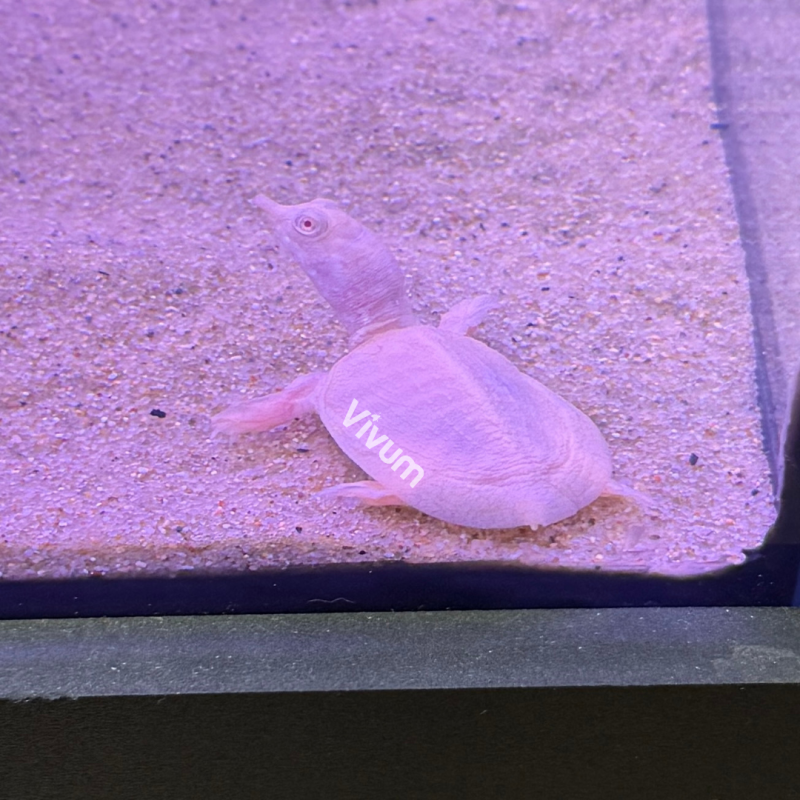
The Tartaruga Chinesa de Carapaça Mole (Pelodiscus sinensis) is a fascinating aquatic species, characterised by a flexible, leathery shell instead of the usual hard shell. This adaptation makes them extremely agile, fast swimmers, but also more vulnerable to injury. With their elongated, snorkel-like snout and unique hunting behaviour, they are extremely active and interesting to watch.
This species requires experienced keepers due to its territorial temperament, specific water quality needs and tendency to bite when handled. However, with proper care, they can be rewarding companions for aquatic reptile enthusiasts looking for a challenge.
Size: Minimum 450 litres (120x60x60cm) for 1 adult
Material: Glass or acrylic
Water temperature should be kept between 24-29°C, ideally with a quality submersible heater fitted with a guard to prevent injury or damage. Although they spend most of their time in the water, these turtles benefit from a basking area. The basking zone should reach 30-32°C and can be heated with a heat lamp placed over a basking platform.
Although this aquatic species spends most of its time submerged, UVB is beneficial for shell health and calcium metabolism. Low to medium intensity UVB lamps (5-7%) placed over the basking area are recommended. UVB exposure is especially important for growing juveniles.
Water quality is absolutely critical for this species' health. Softshell turtles are extremely messy and their soft shell is very prone to bacterial and fungal infections if the water is not clean. A powerful filtration system is essential, ideally an external canister filter rated for twice the aquarium's capacity.
The water should be slightly acidic (pH 6.0-7.0), which helps prevent skin and shell infections. Adding Indian almond leaves (Catappa) can help maintain the right pH and has natural antibacterial properties. Weekly partial water changes (25-30%) are needed to maintain ideal quality.
The ideal substrate is fine, smooth sand at least 5-7cm deep. This species naturally buries itself in the substrate, leaving only its eyes and snout visible while waiting for prey. Avoid gravel, sharp rocks or any abrasive material that could damage the soft shell.
Decor should be minimal and carefully chosen to avoid injuries. Smooth logs, rounded rocks and hardy aquatic plants can be included, but make sure there are no sharp edges. An easily accessible basking platform should be available, preferably with a gentle ramp. These turtles are excellent swimmers and appreciate open swimming space.
Feeding habits: Predominantly Carnivorous
Diet: This species is an active predator that feeds mainly on animal protein. Juveniles should be fed daily, while adults can be fed every 2-3 days. It is important not to overfeed, as this species is prone to obesity and internal damage from overeating. A good rule is to offer an amount of food equal to the size of the turtle's head.
Live/fresh food: Small fish, earthworms, snails, mussels, shrimp, aquatic insect larvae, crickets, roaches
Frozen food: Fish, shrimp, bloodworms
Commercial food: High-quality pellets made for carnivorous aquatic turtles
Important note: Always offer a varied diet to ensure complete nutrition. This species prefers to feed in the water.
Temperament: Softshell turtles are extremely territorial and aggressive, especially towards turtles of the same species. They should not be kept in groups except in very large setups. They are very nervous when handled and will bite defensively. Their long, flexible neck lets them reach almost any part of their body, and bites can be painful and cause injury. Handling should be kept to a minimum and, when necessary, done with protective gloves.
Health: This species is particularly prone to fungal and bacterial infections of the shell and skin because of its soft, permeable shell. Warning signs include white patches, redness, swelling, loss of appetite or lethargy. Clean water and a basking area are essential to prevent health problems. Any sign of illness should be checked by a reptile vet.
Under Portuguese Law No. 95/2017 of 23 August, the sale and/or advertising of wild/exotic animals through websites or online platforms is not permitted. To find out which animals we currently have available and their conditions of sale, please get in touch with us.