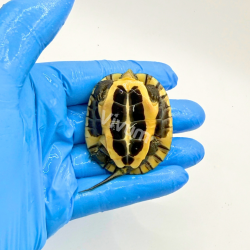
| Common Name: | Tartaruga de Lago Amarela |
| Scientific Name: | Mauremys mutica |
| CITES Appendix: | Yes, IIB |
| Annex II Portuguese Ordinance No. 86/2018: | No |
Under Portuguese Law No. 95/2017 of 23 August, the sale and/or advertising of wild/exotic animals through websites or online platforms is not permitted. To find out which animals we currently have available and their conditions of sale, please get in touch with us.
 Progressive Discounts
The more you buy, the less you pay for transport
 Same Day Dispatch
For orders finalized by 3pm
 Live/Frozen Guaranteed Delivery
In live and frozen food
Size: Adults can reach a shell length of 19-20cm
Origin: Southern and central China, Vietnam, Laos, Taiwan and the Ryukyu Islands
Lifespan: Up to 25 years
Natural Habitat: They inhabit ponds, streams, marshes and other shallow, slow-moving waters
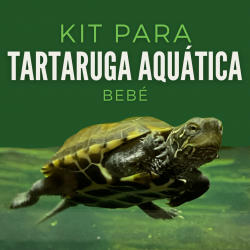
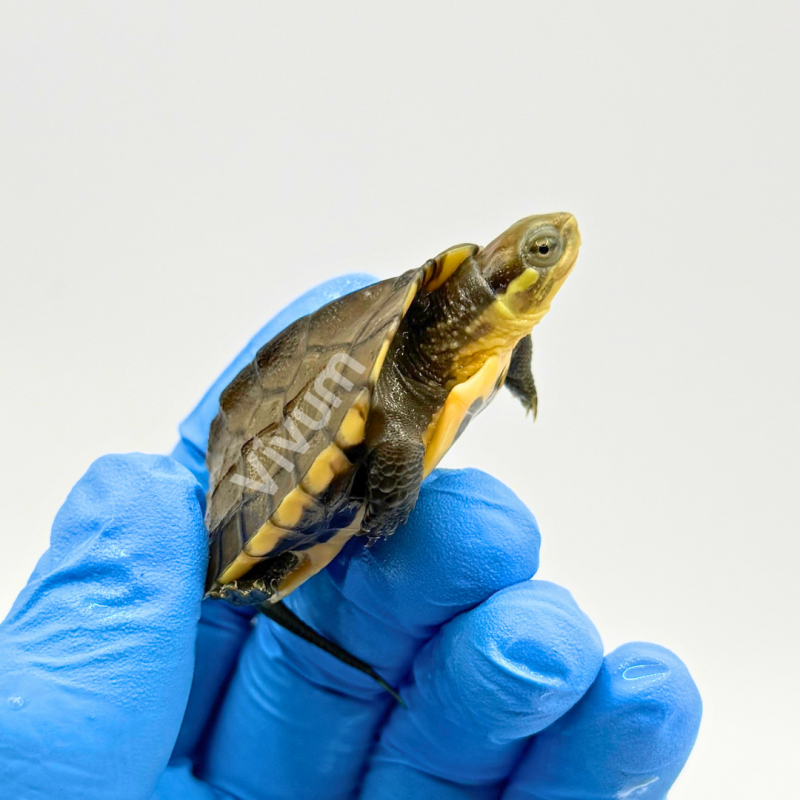
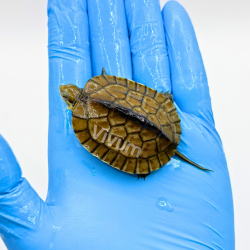
The Tartaruga de Lago Amarela (Mauremys mutica) is a semi-aquatic turtle species from Southeast Asia, easily recognised by the characteristic yellow stripe running behind the eye along the neck. The shell ranges from brownish to greyish tones, while the plastron is yellow or orange with dark blotches at the edges. It is a hardy, adaptable species, popular with both newcomers to aquatic turtles and more experienced keepers.
Although this is a relatively easy species to keep, you should pay attention to a few aspects and ensure certain conditions, which you will find in the following paragraphs.
Size: A minimum aquarium/paludarium of 120x50x50cm is recommended for 1 adult
Material: Glass or PVC, with a well-defined dry basking area
Water should be kept at 22ºC to 26ºC, using an aquarium heater fitted with a guard to prevent direct contact with the animal. The basking area (out of the water) should reach 30ºC to 35ºC, using a heat lamp placed over a dry platform. At night, without an additional heat source, the ambient temperature should not fall much below 18-20ºC.
Moderate UVB exposure (UVI 1-2, Ferguson Zone 2) is recommended, essential for vitamin D3 synthesis and proper calcium metabolism. Use a 5 to 7% UVB tube placed over the basking area.
As this species spends much of its time submerged, especially as a juvenile, water quality is essential for its health. Use an external or internal filter sized for the water volume, as these turtles produce a lot of waste. Regular partial water changes are recommended even with adequate filtration.
The water should be deep enough for the animal to swim comfortably, but there should always be easy access to a dry area where it can leave the water to warm up and fully dry its shell.
The dry basking area should be large enough for the animal's whole body and easy to reach via a ramp or gentle slope. You can equip the aquarium with floating logs, smooth rocks and aquatic plants (live or artificial) for hiding and enrichment. Avoid decor with sharp edges that could injure the animal.
Feeding habits: Omnivorous
Diet: As juveniles, the diet should be richer in animal protein. As they grow, the proportion of vegetables should gradually increase. Juveniles should be fed daily, while adults can be fed every other day.
Animal protein: Commercial aquatic turtle food, fish, shrimp, earthworms, crickets and other insects
Vegetables: Romaine lettuce, watercress, dandelion, clover, aquatic plants such as duckweed
For vitamin and mineral supplementation, regularly dust food with Calcium Powder and occasionally with a quality Multivitamin Complex (with Vit. D3), especially for animals kept without access to direct sunlight.
Under Portuguese Law No. 95/2017 of 23 August, the sale and/or advertising of wild/exotic animals through websites or online platforms is not permitted. To find out which animals we currently have available and their conditions of sale, please get in touch with us.