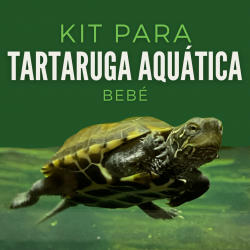


| Common Name: | Tartaruga de Pintas Amarelas |
| Scientific Name: | Podocnemis unifilis |
| CITES Appendix: | Yes, IIB |
| Annex II Portuguese Ordinance No. 86/2018: | No |
Under Portuguese Law No. 95/2017 of 23 August, the sale and/or advertising of wild/exotic animals through websites or online platforms is not permitted. To find out which animals we currently have available and their conditions of sale, please get in touch with us.
 Progressive Discounts
The more you buy, the less you pay for transport
 Same Day Dispatch
For orders finalized by 3pm
 Live/Frozen Guaranteed Delivery
In live and frozen food
Size: Adult males can reach 35-45cm and females 75cm
Origin: Amazon (Brazil, Colombia, Venezuela, Ecuador, Peru, Bolivia and the Guianas)
Lifespan: Up to 40 years
Natural Habitat: It inhabits rivers, lakes, flooded areas and swamps of the Amazon basin
The Tartaruga de Pintas Amarelas (Podocnemis unifilis), also known as the Tracajá, is a semi-aquatic species from the Amazon basin. Its name comes from the characteristic yellow spots on the head, especially visible in juveniles. These turtles belong to the side-necked turtle group, which retract the neck sideways rather than vertically into the shell.
They are animals with specific care requirements, particularly regarding space and water quality. With proper care, Podocnemis unifilis can become a fascinating, long-lived pet for those prepared to meet its specific needs.
Size: Minimum 250x100x60cm for 1 adult; larger tanks for groups
Material: Glass for aquaterrariums or sturdy plastic for outdoor tanks
Water temperature should be kept between 26-28°C using aquarium heaters. The dry basking area should reach 32-35°C with heat lamps. The ambient temperature of the enclosure should stay between 24-28°C. At night the temperature can drop slightly, but should not fall below 22°C.
UVB is essential for this species, as it is needed for vitamin D3 synthesis and calcium metabolism. Medium to high output UVB lamps (5-10%) are recommended, placed over the dry area and replaced every 6-12 months. A 12-hour daily lighting cycle properly simulates the natural photoperiod.
Podocnemis unifilis requires clean, good-quality water. Water depth should be at least 1.5 times the width of the turtle's shell, allowing it to swim freely. An efficient filtration system is essential, preferably a canister or external filter rated for at least twice the water volume.
A partial water change (around 25-30%) is recommended weekly, along with regular filter maintenance. Chlorine and chloramine in tap water are harmful, so treat the water with suitable conditioners before adding it.
The enclosure should include a land area or drying platform covering at least 25-30% of the total surface, so the turtle can leave the water completely. This area should have a gentle slope for easy access. Floating logs, rocks and commercial platforms can be used to create these areas.
You can add aquatic substrates such as large gravel (bigger than the turtle's head to prevent ingestion) or leave the bottom bare for easier cleaning. Hardy aquatic plants can be included, although they may be damaged or eaten. Underwater hides such as ceramic pots or submerged wood provide security and enrichment.
Feeding habits: Omnivorous (more carnivorous as juveniles, more herbivorous as adults)
Diet: The diet of Podocnemis unifilis should vary with age. Juveniles are more carnivorous, needing roughly 70% animal protein and 30% plant matter. As they mature, this ratio gradually reverses, with adults eating around 60-70% plant matter and 30-40% animal protein.
Animal protein: Whole fish (with bones for calcium), shrimp, molluscs, aquatic insects, insect larvae, earthworms, crickets, snails, commercial aquatic turtle food
Vegetables: Water lettuce, water hyacinth, elodea, spinach, turnip greens, watercress, chicory, dandelion, chard
Fruit (occasionally): Melon, strawberry, mango, papaya, apple (seedless)
Proper supplementation is important for the long-term health of these turtles. Use a calcium supplement without D3 twice a week and a multivitamin once a week. For animals with adequate UVB exposure, vitamin D3 supplementation can be reduced.
Feed juveniles daily in small portions, reducing to 3-4 times a week for subadults and 2-3 times a week for adults. Always offer food in the water, as these turtles cannot swallow out of it.
Under Portuguese Law No. 95/2017 of 23 August, the sale and/or advertising of wild/exotic animals through websites or online platforms is not permitted. To find out which animals we currently have available and their conditions of sale, please get in touch with us.