
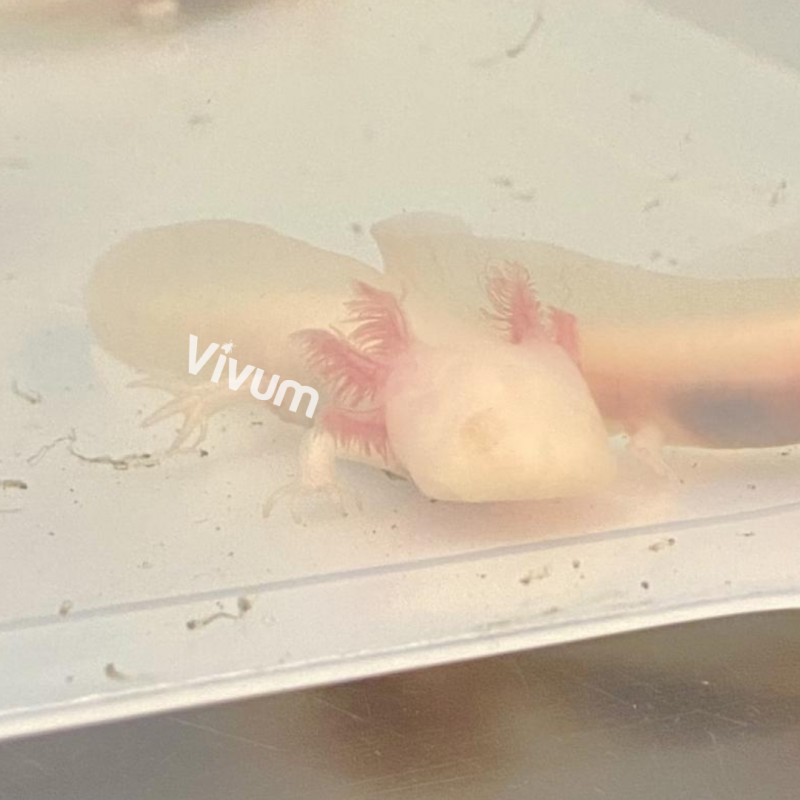
| Common Name: | Axolote |
| Scientific Name: | Ambystoma mexicanum |
| CITES Appendix: | Yes, IIB |
| Annex II Portuguese Ordinance No. 86/2018: | No |
Under Portuguese Law No. 95/2017 of 23 August, the sale and/or advertising of wild/exotic animals through websites or online platforms is not permitted. To find out which animals we currently have available and their conditions of sale, please get in touch with us.
 Progressive Discounts
The more you buy, the less you pay for transport
 Same Day Dispatch
For orders finalized by 3pm
 Live/Frozen Guaranteed Delivery
In live and frozen food
O conteúdo (Texto e Fotografias) desta página está protegido por direitos de autor. A sua cópia, redistribuição ou modificação sem autorização prévia poderá resultar em responsabilização legal.
Size: Adults can reach between 15 and 25cm
Origin: Mexico
Lifespan: Up to 15 years in captivity
Natural Habitat: They inhabit dark, cold lakes in the mountains of Mexico
The Axolote is one of the most unusual and interesting amphibian species to keep in captivity. Studied for over a century for its incredible regenerative abilities, it is a fully aquatic species that is practically extinct in the wild but very abundant in captivity. With its friendly, smiling look, it makes an excellent pet for children and adults alike.
Although this is a relatively easy species to keep, you should pay attention to a few aspects and ensure certain conditions, which you will find in the following paragraphs.
Size: An aquarium of at least 60 litres is recommended, plus 40 extra litres for each Axolote
Material: Glass
The Axolote needs low temperatures. The water temperature should always be around 18ºC. It also prefers a darker environment with little light, so take care not to light the aquarium with strong lights to avoid stressing it.
The Axolote is sensitive to water quality, so make sure the aquarium has a good filtration system. Also make sure it does not create overly strong currents, as this species prefers calmer water.
The aquarium can be decorated with logs, stones and plants (live or artificial) that provide hiding places and shelter from the light.
This species does not need a dry area in the aquarium.
Feeding habits: Carnivorous
Diet: They should be fed daily as juveniles and every other day as adults.
Commercial Food: The staple diet should be a commercial pellet food.
Treats: Other foods can also be offered regularly, such as bloodworms, brine shrimp, earthworms and fish-food shrimp.
Under Portuguese Law No. 95/2017 of 23 August, the sale and/or advertising of wild/exotic animals through websites or online platforms is not permitted. To find out which animals we currently have available and their conditions of sale, please get in touch with us.

