
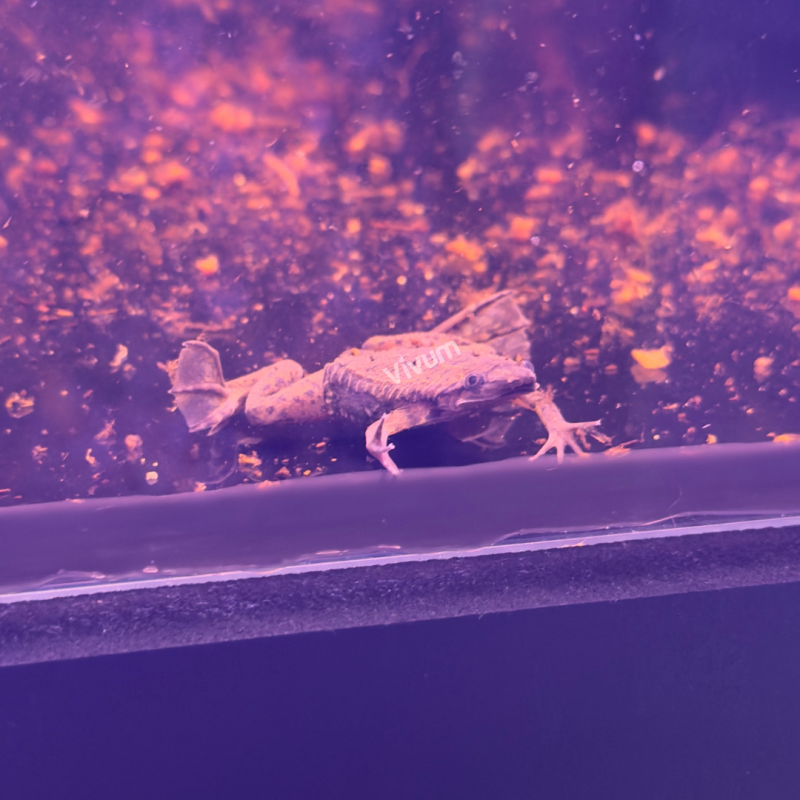
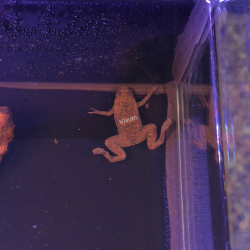
| Common Name: | Sapo Pipa |
| Scientific Name: | Pipa carvalhoi |
| CITES Appendix: | No |
| Annex II Portuguese Ordinance No. 86/2018: | No |
Under Portuguese Law No. 95/2017 of 23 August, the sale and/or advertising of wild/exotic animals through websites or online platforms is not permitted. To find out which animals we currently have available and their conditions of sale, please get in touch with us.
 Progressive Discounts
The more you buy, the less you pay for transport
 Same Day Dispatch
For orders finalized by 3pm
 Live/Frozen Guaranteed Delivery
In live and frozen food
Size: Females up to 7cm, males up to 6cm
Origin: Brazil (endemic to eastern and north-eastern Brazil)
Lifespan: Up to 15 years
Natural Habitat: They inhabit freshwater swamps, lakes, ponds and wetlands in subtropical dry forests and moist savannahs of Brazil
Pipa carvalhoi, known as the Sapo Pipa de Carvalho, is an endemic Brazilian species that stands out for its adaptability and ease of care. It inhabits a wide variety of aquatic environments — from natural swamps to artificial lakes — showing remarkable tolerance of different conditions. This aquatic species is characterised by the flattened shape typical of its family and its peaceful behaviour.
It is one of the hardiest and most tolerant Pipa species, easier to keep than P. pipa. Its wide natural range and adaptability make it an excellent choice for those with experience of aquatic amphibians. Although relatively easy to keep, you should pay attention to a few aspects described in the following paragraphs.
Size: Minimum 80 litres for 1 adult, 120 litres for a pair
Material: Glass with a minimum depth of 40cm
Keep the temperature between 24-28ºC using guarded submersible heaters to prevent burns. This species tolerates temperature variations well and is less demanding than other aquatic species. At night the temperature can drop slightly without problems.
Pipa carvalhoi does not need UVB. Keep a 12-hour photoperiod with low to moderate LED lighting or natural room light. Avoid very intense lighting, which can cause stress.
Keep the pH between 6.0 and 7.5; this species is quite tolerant of variations. Water can be soft to moderately hard. Use adequate filtration but with a moderate flow so as not to disturb the animals. Carry out 25-30% water changes weekly.
This species is remarkably tolerant of water quality variations and hardier than most aquatic amphibians. Use chlorine-free water and keep parameters stable.
You can use fine sand or medium gravel, or keep a bare bottom for easier cleaning. Include live aquatic plants (Java moss, elodea, anubias) to provide cover and improve water quality. Add logs or smooth rocks to create hides.
Make sure all decorative items are secure and have no sharp edges. This species appreciates having several shelter options throughout the aquarium.
Feeding habits: Carnivorous
Diet: Feed 2-3 times a week with live or frozen prey. Juveniles should be fed more often, 3-4 times a week.
Aquatic prey: Small fish (guppies, mollies), aquatic worms, mosquito larvae, adult brine shrimp
Terrestrial prey: Earthworms, small crickets, small roaches
Under Portuguese Law No. 95/2017 of 23 August, the sale and/or advertising of wild/exotic animals through websites or online platforms is not permitted. To find out which animals we currently have available and their conditions of sale, please get in touch with us.
