
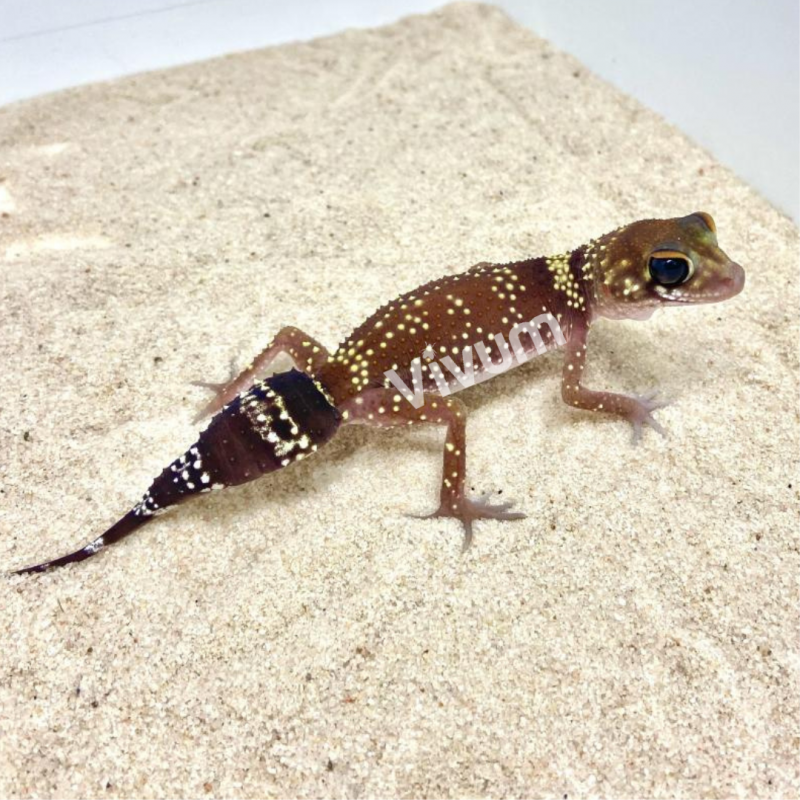
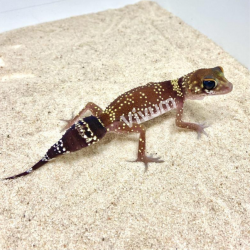
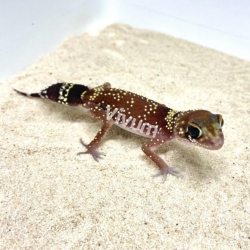
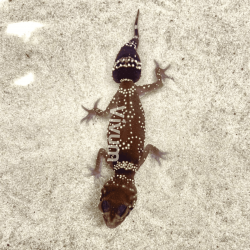
| Common Name: | Thick-Tailed Gecko |
| Scientific Name: | Underwoodisaurus milii |
| CITES Appendix: | III |
| Annex II Portuguese Ordinance No. 86/2018: | No |
Under Portuguese Law No. 95/2017 of 23 August, the sale and/or advertising of wild/exotic animals through websites or online platforms is not permitted. To find out which animals we currently have available and their conditions of sale, please get in touch with us.
 Progressive Discounts
The more you buy, the less you pay for transport
Progressive Discounts
The more you buy, the less you pay for transport
 Same Day Dispatch
For orders finalized by 3pm
Same Day Dispatch
For orders finalized by 3pm
 Live/Frozen Guaranteed Delivery
In live and frozen food
Live/Frozen Guaranteed Delivery
In live and frozen food
O conteúdo (Texto e Fotografias) desta página está protegido por direitos de autor. A sua cópia, redistribuição ou modificação sem autorização prévia poderá resultar em responsabilização legal.
Size: Adults can reach 12cm
Origin: Australia
Lifespan: Up to 10 years in captivity
Natural Habitat: Thick-Tailed Geckos are found in arid and semi-arid environments, sandy plains and dune areas across the Australian continent.
Thick-Tailed Geckos are an increasingly popular species in the hobby. Although very easy to keep, they have only become more common and accessible in recent years. They are small, easy to care for and very attractive. Overall, they are an excellent reptile species for beginners.
Although this is an easy species to keep, a few aspects require attention and certain conditions must be ensured, as described in the following paragraphs.
Size: A minimum terrarium of 60x45x45cm is recommended for 1 adult
Material: Glass or Wood
A terrarium with a thermal gradient should be provided, with a minimum temperature of 21ºC on the cool side and around 30ºC on the warm side. To ensure the correct temperatures in your Underwoodisaurus milii's terrarium, a heat mat or heat cable covering no more than 1/3 of the terrarium floor can be used.
Being a nocturnal species, Thick-Tailed Geckos do not require UVB radiation. However, they can benefit from exposure to low levels of it (using a ShadeDweller lamp).
Thick-Tailed Geckos are desert animals; however, it is important to lightly mist the terrarium 2 to 3 times a week, especially inside the burrows/hides.
Thick-Tailed Geckos come from arid, sandy areas, so the best way to keep them is on a fine, smooth, dust-free sand substrate, which can also be mixed with dry coco fibre. The terrarium should have at least two burrows/hides – one on the cool side and one on the warm side. Rocks, branches and plants (natural or artificial) can be used as decor.
Feeding habits: Insectivorous
Diet: They should be fed live insects 4 to 5 times a week.
Insects: Crickets and Roaches.
For vitamin and mineral supplementation, every meal should be supplemented by dusting the insects with a good-quality Calcium and Vitamin Supplement (with Vit. D3).
Under Portuguese Law No. 95/2017 of 23 August, the sale and/or advertising of wild/exotic animals through websites or online platforms is not permitted. To find out which animals we currently have available and their conditions of sale, please get in touch with us.
