
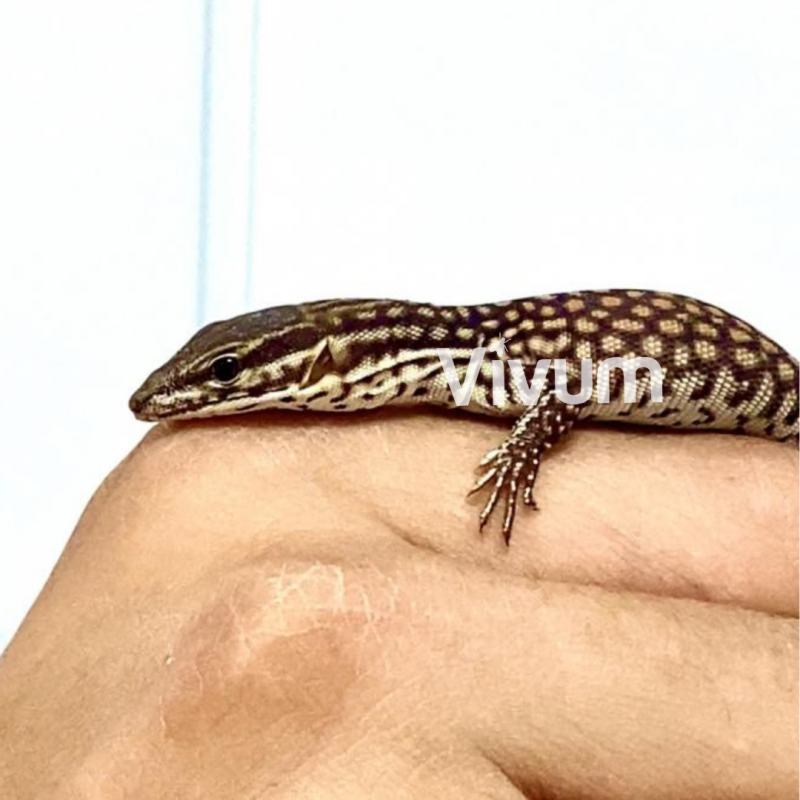

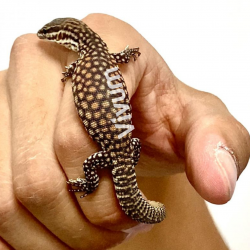
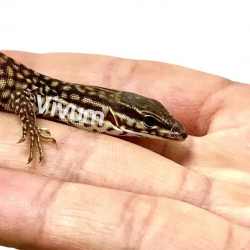
| Common Name: | Ackie Monitor |
| Scientific Name: | Varanus acanthurus |
| CITES Appendix: | Yes, IIB |
| Annex II Portuguese Ordinance No. 86/2018: | Yes |
Under Portuguese Law No. 95/2017 of 23 August, the sale and/or advertising of wild/exotic animals through websites or online platforms is not permitted. To find out which animals we currently have available and their conditions of sale, please get in touch with us.
 Progressive Discounts
The more you buy, the less you pay for transport
Progressive Discounts
The more you buy, the less you pay for transport
 Same Day Dispatch
For orders finalized by 3pm
Same Day Dispatch
For orders finalized by 3pm
 Live/Frozen Guaranteed Delivery
In live and frozen food
Live/Frozen Guaranteed Delivery
In live and frozen food
O conteúdo (Texto e Fotografias) desta página está protegido por direitos de autor. A sua cópia, redistribuição ou modificação sem autorização prévia poderá resultar em responsabilização legal.
Size: Adults can reach up to 60 cm in length.
Origin: Australia.
Lifespan: They can live up to 15 years in captivity.
Natural Habitat: Arid or seasonally dry areas with sandy and rocky soils.
Ackies are one of the smallest monitor species. They are ideal for anyone who wants to experience the characteristic personality of this group without having to house a larger animal. Their intelligence and active, diurnal habits make them a fascinating species. Although their personality can be challenging, with proper care and work they can be kept successfully in captivity.
Although this is a relatively easy species to keep, a few aspects require attention and certain conditions must be ensured, as described in the following paragraphs.
Size: Minimum of 150x60x60cm for 1 adult. Juveniles can be kept in 90x45x60cm terrariums.
Material: Glass or Wood
Ackie originate from areas where temperatures reach very high levels. It is therefore important to provide a hotspot of around 55ºC, with the rest of the terrarium offering a thermal gradient between 25ºC and 35ºC. The best way to achieve these temperatures is with a combination of Halogen Lamps, HID Lamps and Deep Heat Projectors. At night the temperature can drop to 22-24°C.
High-quality UVB lighting must be provided to allow vitamin D3 synthesis. Use lamps with a high UV index, such as T5 14% tubes or mercury vapour/solar lamps.
Relative humidity does not need to be kept very high. However, as described below, it is important that the substrate has a moisture level of around 50% so that it holds its structure.
A water bowl should always be available in the terrarium.
Provide a variety of hides, logs, branches and rocks in the terrarium so your Ackie can explore and feel secure. Especially as juveniles, they like to climb and explore higher branches.
Ackie love to dig. It is therefore important to provide a layer of slightly moist, well-compacted substrate at least 30cm deep so they can dig their tunnels. Organic substrates based on coco fibre and/or clay are the best option.
Feeding habits: Insectivorous
In the wild, Ackie have a mainly insectivorous diet. A diet based on crickets, locusts and roaches should be provided, occasionally varied every 2-3 weeks with a meal of rodents, fish or eggs.
Juveniles should be fed daily, with adults fed 2 to 3 times a week.
For vitamin and mineral supplementation, alternate a meal dusted with Calcium Powder with one dusted with a good-quality Multivitamin Complex (with Vit. D3).
Under Portuguese Law No. 95/2017 of 23 August, the sale and/or advertising of wild/exotic animals through websites or online platforms is not permitted. To find out which animals we currently have available and their conditions of sale, please get in touch with us.
