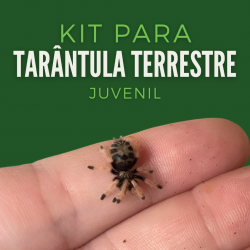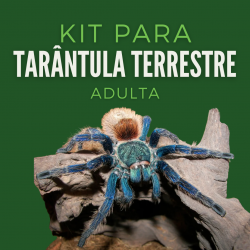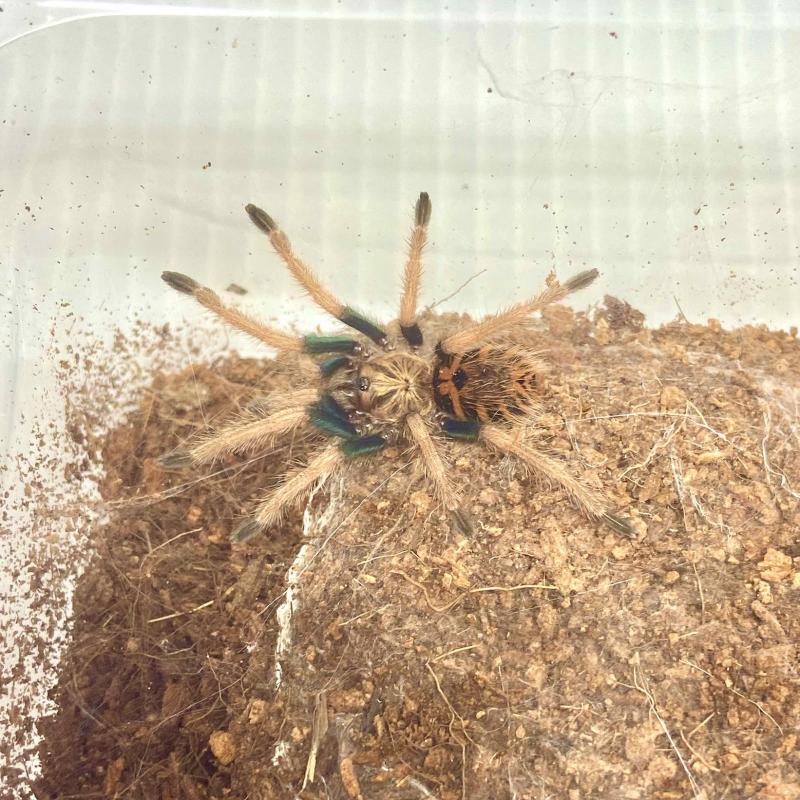
| Common Name: | Tarântula Chromatopelma cyanopubescens |
| Scientific Name: | Chromatopelma cyanopubescens |
| CITES Appendix: | No |
| Annex II Portuguese Ordinance No. 86/2018: | Yes |
Under Portuguese Law No. 95/2017 of 23 August, the sale and/or advertising of wild/exotic animals through websites or online platforms is not permitted. To find out which animals we currently have available and their conditions of sale, please get in touch with us.
 Progressive Discounts
The more you buy, the less you pay for transport
Progressive Discounts
The more you buy, the less you pay for transport
 Same Day Dispatch
For orders finalized by 3pm
Same Day Dispatch
For orders finalized by 3pm
 Live/Frozen Guaranteed Delivery
In live and frozen food
Live/Frozen Guaranteed Delivery
In live and frozen food
Size: Adults can reach 16cm
Origin: Venezuela
Lifespan: Females: up to 15 years. Males: 5 to 10 years.
Natural Habitat: Chromatopelma cyanopubescens inhabits forests in Venezuela.
Chromatopelma cyanopubescens is an easy-to-keep tarantula species. Although it prefers to flee and hide, it can bite, so handling should be avoided as much as possible.
Although this is an easy species to keep, you should pay attention to a few aspects and ensure certain conditions, which you will find in the following paragraphs.
Size: A minimum terrarium of 30x30x30 is recommended for 1 adult female. Younger animals should be kept in proportionally smaller terrariums.
Material: Glass, plastic, acrylic
The terrarium temperature should be kept between 20 and 28ºC.
Tarantulas do not need UVB.
Chromatopelma cyanopubescens prefers a slightly arid environment, so avoid excess humidity.
It is recommended to always provide a shallow water dish where they can drink.
For decor, try to recreate a forest habitat. This species likes both to burrow and to spin webs at the top of the terrarium, so provide a tropical substrate at least 10-15cm deep (for adults) as well as vertical decor that lets the animal explore the whole terrarium. You can decorate the terrarium with logs, plants (live or artificial), cork bark, stones, moss...
Feeding habits: Insectivorous
Diet: As juveniles they can be fed twice a week. As they grow, feeding can be reduced to once a week. This species has a good appetite and feeds readily.
Insects: Roaches, Crickets, Locusts, Calcium Worms, Waxworms, Mealworms...
Tarantulas do not need supplementation.
Under Portuguese Law No. 95/2017 of 23 August, the sale and/or advertising of wild/exotic animals through websites or online platforms is not permitted. To find out which animals we currently have available and their conditions of sale, please get in touch with us.