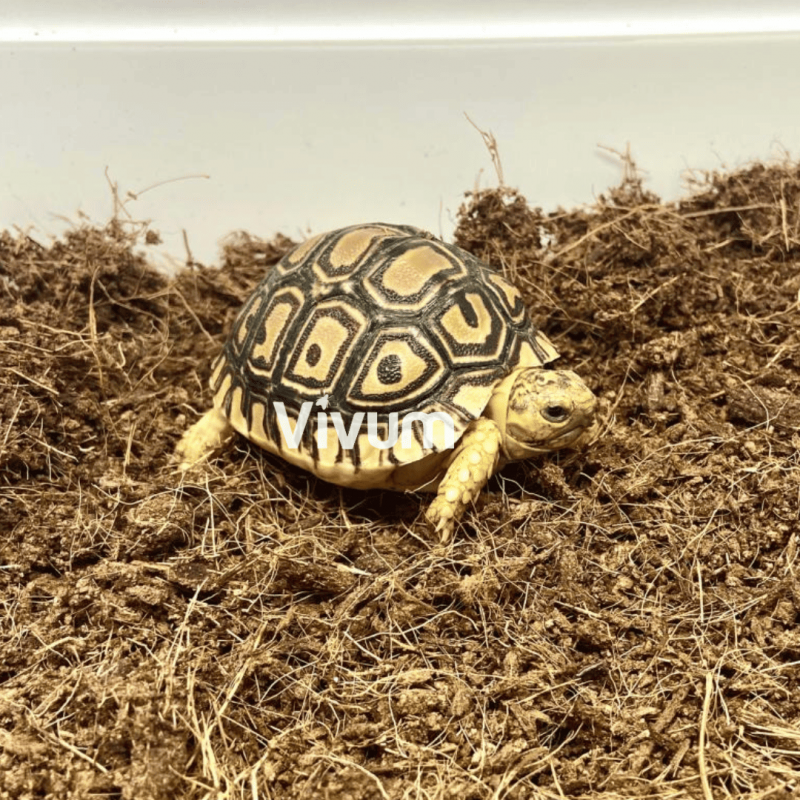
| Common Name: | Tartaruga Leopardo |
| Scientific Name: | Stigmochelys pardalis |
| CITES Appendix: | Yes, IIB |
| Annex II Portuguese Ordinance No. 86/2018: | No |
Under Portuguese Law No. 95/2017 of 23 August, the sale and/or advertising of wild/exotic animals through websites or online platforms is not permitted. To find out which animals we currently have available and their conditions of sale, please get in touch with us.
 Progressive Discounts
The more you buy, the less you pay for transport
 Same Day Dispatch
For orders finalized by 3pm
 Live/Frozen Guaranteed Delivery
In live and frozen food
O conteúdo (Texto e Fotografias) desta página está protegido por direitos de autor. A sua cópia, redistribuição ou modificação sem autorização prévia poderá resultar em responsabilização legal.
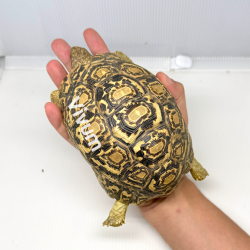
Size: Adults can reach 40-70cm
Origin: Eastern and Southern Africa (Sudan, Ethiopia, South Africa, Namibia)
Lifespan: Up to 100 years
Natural Habitat: They inhabit savannahs, grasslands and semi-arid regions of Eastern and Southern Africa
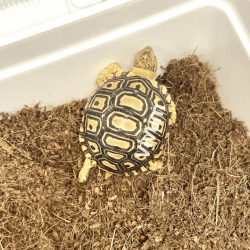
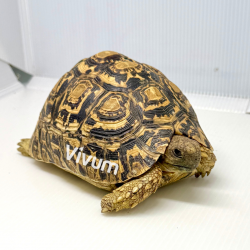
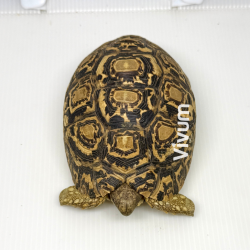
The Tartaruga Leopardo (Stigmochelys pardalis) is one of the largest tortoises on the African continent, recognised by the distinctive pattern of black markings on a yellow or brown background on its shell. The species is named after this unique pattern, which resembles a leopard's. They are robust animals with a high-domed shell, adapted for protection against predators and climatic extremes.
This species requires specific care, especially regarding space and sun exposure. They are large animals that need a spacious enclosure, preferably outdoors for adults. With proper care, the Tartaruga Leopardo can live for many decades, becoming a long-term companion for anyone ready to make that commitment.
Size: Minimum 3x2m for 1 adult (preferably outdoors); 120x60cm for juveniles (indoors)
Material: Outdoor enclosure with solid walls, or indoor glass or wooden enclosure for juveniles
The Tartaruga Leopardo needs a suitable thermal gradient, with an ambient temperature of 24-29°C during the day and a basking spot reaching 35-38°C. At night the temperature can drop to 20°C, but should not go below this. For animals kept indoors, use heat lamps and/or heat panels to create the necessary gradient.
UVB is absolutely essential for this species' health, as it is needed for vitamin D3 synthesis and calcium metabolism. For animals kept indoors, use high-output UVB lamps (10-12%), placed at an appropriate distance and replaced every 6-12 months. Tortoises kept outdoors benefit from natural sunlight, as long as they always have access to shaded areas for thermoregulation.
The Tartaruga Leopardo needs variable humidity levels, reflecting its natural habitat with dry and wet periods. Relative humidity should range between 40-60%, with higher values for growing juveniles (60-70%) to prevent shell deformities. A shallow container of fresh water should always be available for drinking and occasional bathing.
It is recommended to create a more humid area in the enclosure where they can regulate their hydration, especially for juveniles. Regular 15-20 minute baths in lukewarm water (about twice a week) help with hydration and hygiene.
The enclosure should mimic the natural African savannah. For substrate, use a mix of fertiliser-free soil, sand and coco fibre at least 10-15cm deep to allow natural digging behaviour. For young tortoises kept indoors, you can use coco fibre, alfalfa hay or recycled paper.
Decor should include hides where the tortoise can shelter from the heat and sleep. Flat rocks under the heat source provide an ideal spot for thermoregulation. For adults in outdoor enclosures, include a covered area for protection from the weather. Safe, non-toxic plants can be added to enrich the environment and provide natural food sources.
Feeding habits: Herbivorous
Diet: The Tartaruga Leopardo's diet should be high in fibre and low in protein and fruit. It should consist mainly of hays and wild weeds (70-80%), leafy greens (15-20%) and occasional fruit (5% or less).
Weeds and hays: Alfalfa hay, dandelion, clover, chicory, elephant grass, wheatgrass, lawn grass
Leafy greens: Radicchio, rocket, endive, escarole, watercress, amaranth, purslane, turnip greens, chicory
Other vegetables (in moderation): Pumpkin, courgette, pepper, carrot (grated)
Edible flowers: Hibiscus, mallow, dandelion, rose (free of chemical treatments)
Fruit (rarely and in small amounts): Fig, melon, strawberries, raspberries
Proper supplementation is crucial for the long-term health of the Tartaruga Leopardo. Use a calcium supplement without D3 three times a week for adults and five times a week for growing juveniles. A quality multivitamin should be offered once a week. For animals kept outdoors with adequate sun exposure, vitamin D3 supplementation can be reduced.
It is important to ensure a suitable calcium-to-phosphorus ratio in the diet (ideally 2:1 or higher) to prevent metabolic bone disease, which is common in captive tortoises without proper supplementation.
Under Portuguese Law No. 95/2017 of 23 August, the sale and/or advertising of wild/exotic animals through websites or online platforms is not permitted. To find out which animals we currently have available and their conditions of sale, please get in touch with us.