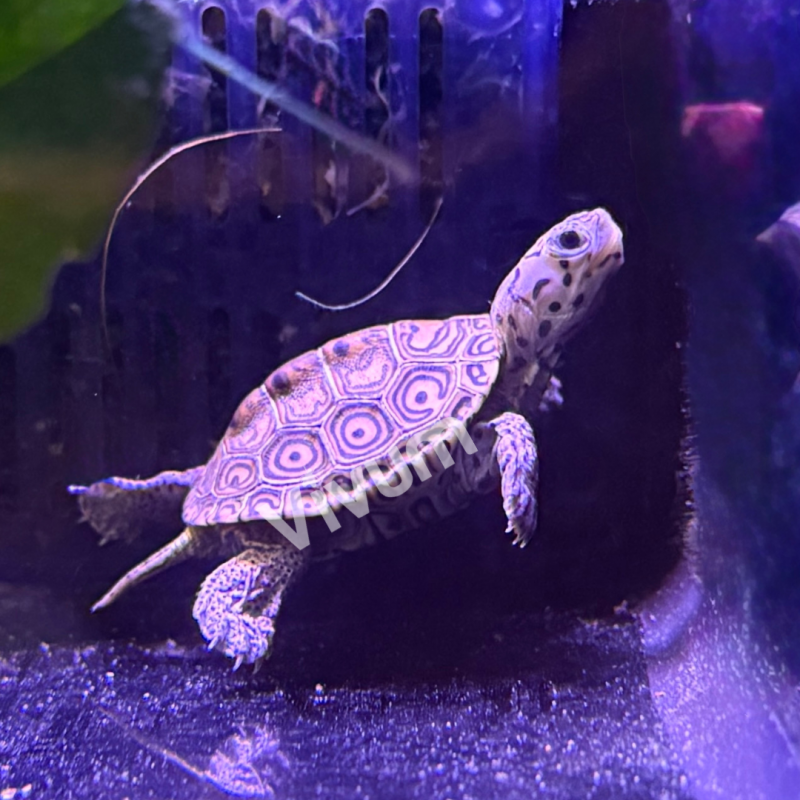


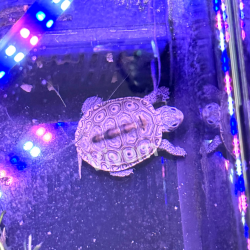
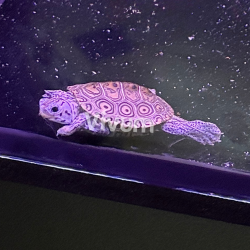
| Common Name: | Tartaruga Diamondback |
| Scientific Name: | Malaclemys terrapin centrata |
| CITES Appendix: | Yes, IIB |
| Annex II Portuguese Ordinance No. 86/2018: | No |
Under Portuguese Law No. 95/2017 of 23 August, the sale and/or advertising of wild/exotic animals through websites or online platforms is not permitted. To find out which animals we currently have available and their conditions of sale, please get in touch with us.
 Progressive Discounts
The more you buy, the less you pay for transport
 Same Day Dispatch
For orders finalized by 3pm
 Live/Frozen Guaranteed Delivery
In live and frozen food
O conteúdo (Texto e Fotografias) desta página está protegido por direitos de autor. A sua cópia, redistribuição ou modificação sem autorização prévia poderá resultar em responsabilização legal.
Size: Males can reach 12cm and females 24cm
Origin: North America
Lifespan: Up to 15 years in captivity
Natural Habitat: They inhabit fresh, brackish and even salt water, including brackish channels, lagoons, marshes, estuaries and coastal areas. They particularly favour reed marshes and, although they can live near salt water, they always need fresh water to drink
The Tartaruga Diamondback is one of the most coveted and hard-to-find turtle species in the hobby. Its colouring and patterns make it extremely eye-catching and unlike any other. Its moderate size and active, bold personality make it a very attractive choice as a pet turtle, even for the most experienced keepers.
Although this is a relatively easy species to keep, you should pay attention to a few aspects and ensure certain conditions, which you will find in the following paragraphs.
Size: Minimum 100x40x50cm / 200 litres for 1 adult
Material: Glass
Although semi-aquatic, the Tartaruga Diamondback also likes to bask on land. A dry platform should be provided as a basking area at 28-32ºC. A 5-7% UVB lamp should also be used to provide the right levels of ultraviolet radiation for this turtle species. To provide both heat and UVB, we recommend a Mercury Vapour/Solar Lamp. Water temperature should be kept between 24-26ºC with a submersible aquarium heater.
A filter is needed to keep the water clean, as these animals produce a lot of waste and have high hygiene requirements. Use a filter with a medium flow rate or one that can be adjusted. For adults we recommend an external filter for its superior performance. You can add some salt to the water to make it slightly brackish, which helps prevent fungal and bacterial growth.
Rocks, logs and live plants can be used to decorate the aquarium.
Feeding habits: Carnivorous
- Foods
Staple: The staple diet should be a commercial food formulated specifically for aquatic turtles.
Occasional: Fish, Crayfish, Frozen Shrimp, Earthworms, Crickets, Roaches, Locusts, Mealworms, Waxworms, Calcium Worms, Bloodworms...
Under Portuguese Law No. 95/2017 of 23 August, the sale and/or advertising of wild/exotic animals through websites or online platforms is not permitted. To find out which animals we currently have available and their conditions of sale, please get in touch with us.