
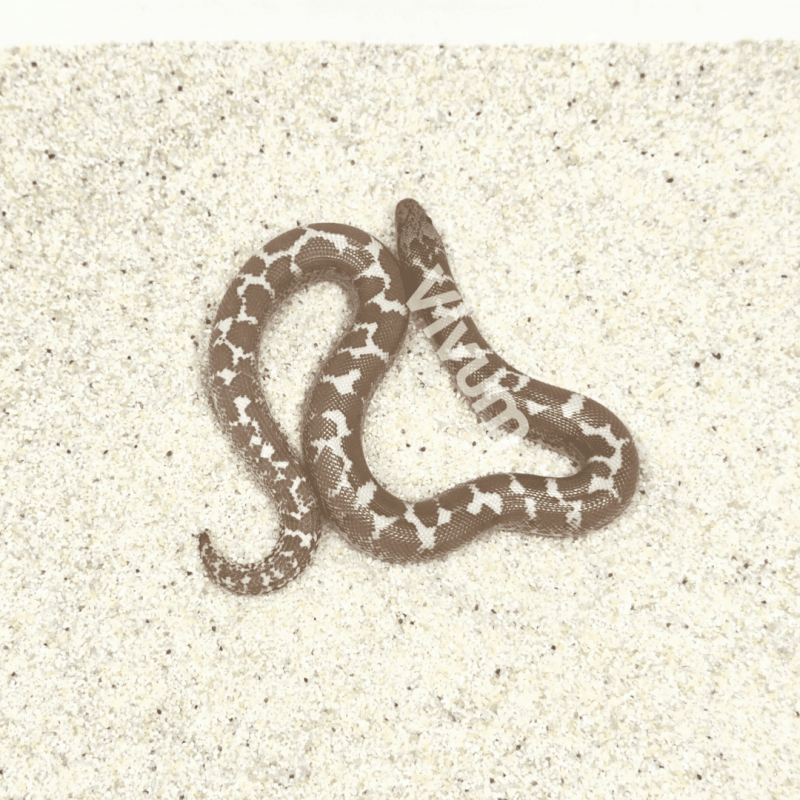
| Common Name: | Boa da Areia Queniana |
| Scientific Name: | Eryx colubrinus |
| CITES Appendix: | Yes, IIB |
| Annex II Portuguese Ordinance No. 86/2018: | Yes |
Under Portuguese Law No. 95/2017 of 23 August, the sale and/or advertising of wild/exotic animals through websites or online platforms is not permitted. To find out which animals we currently have available and their conditions of sale, please get in touch with us.
 Progressive Discounts
The more you buy, the less you pay for transport
Progressive Discounts
The more you buy, the less you pay for transport
 Same Day Dispatch
For orders finalized by 3pm
Same Day Dispatch
For orders finalized by 3pm
 Live/Frozen Guaranteed Delivery
In live and frozen food
Live/Frozen Guaranteed Delivery
In live and frozen food
O conteúdo (Texto e Fotografias) desta página está protegido por direitos de autor. A sua cópia, redistribuição ou modificação sem autorização prévia poderá resultar em responsabilização legal.
Size: Adults can reach up to 90cm
Origin: Egypt, Kenya, Niger, Somalia, Ethiopia and Sudan
Lifespan: Up to 20 years
Natural Habitat: The Boa da Areia Queniana is a burrowing snake found in warm, sandy areas of north-eastern Africa.
The Boa da Areia Queniana is a very distinctive snake species thanks to its colours and pattern. It is an easy-to-keep burrowing species, suitable both for experienced keepers and for those new to the hobby.
Although this is a relatively easy species to keep, you should pay attention to a few aspects and ensure certain conditions, which you will find in the following paragraphs.
Size: Minimum 60x45x45cm for 1 adult. Young snakes can be kept in considerably smaller terrariums.
Material: Glass or Wood
You should set up a terrarium with a thermal gradient, with a minimum temperature of 30ºC on the cool side and around 35ºC on the warm side. At night the temperature should not drop below 22ºC. To maintain these temperatures, use a Heat Mat under the terrarium; a Basking Spot lamp can also be used on the warm side during the day.
They do not require UVB exposure.
Even though it is a species from desert habitats, the Boa da Areia Queniana needs a permanent source of clean water in the terrarium. Relative air humidity should be kept between 30 and 50%.
You can use an Aspen substrate, Arcadia Earth Mix Arid or even Sand. They love to burrow, so provide plenty of substrate for digging. Be careful with the decor you place in the terrarium, as they tend to move the substrate around a lot and could be injured if a decorative item falls on them.
Feeding habits: Carnivorous
Juvenile Diet: You can feed prey of up to 15% of the animal's body mass every 5 days.
Adult Diet (from 2 years old): You can feed prey of up to 10% of the animal's body mass every 5 days.
Dead Mice and/or Rats.
Under Portuguese Law No. 95/2017 of 23 August, the sale and/or advertising of wild/exotic animals through websites or online platforms is not permitted. To find out which animals we currently have available and their conditions of sale, please get in touch with us.
